The Six-Foot Revolution
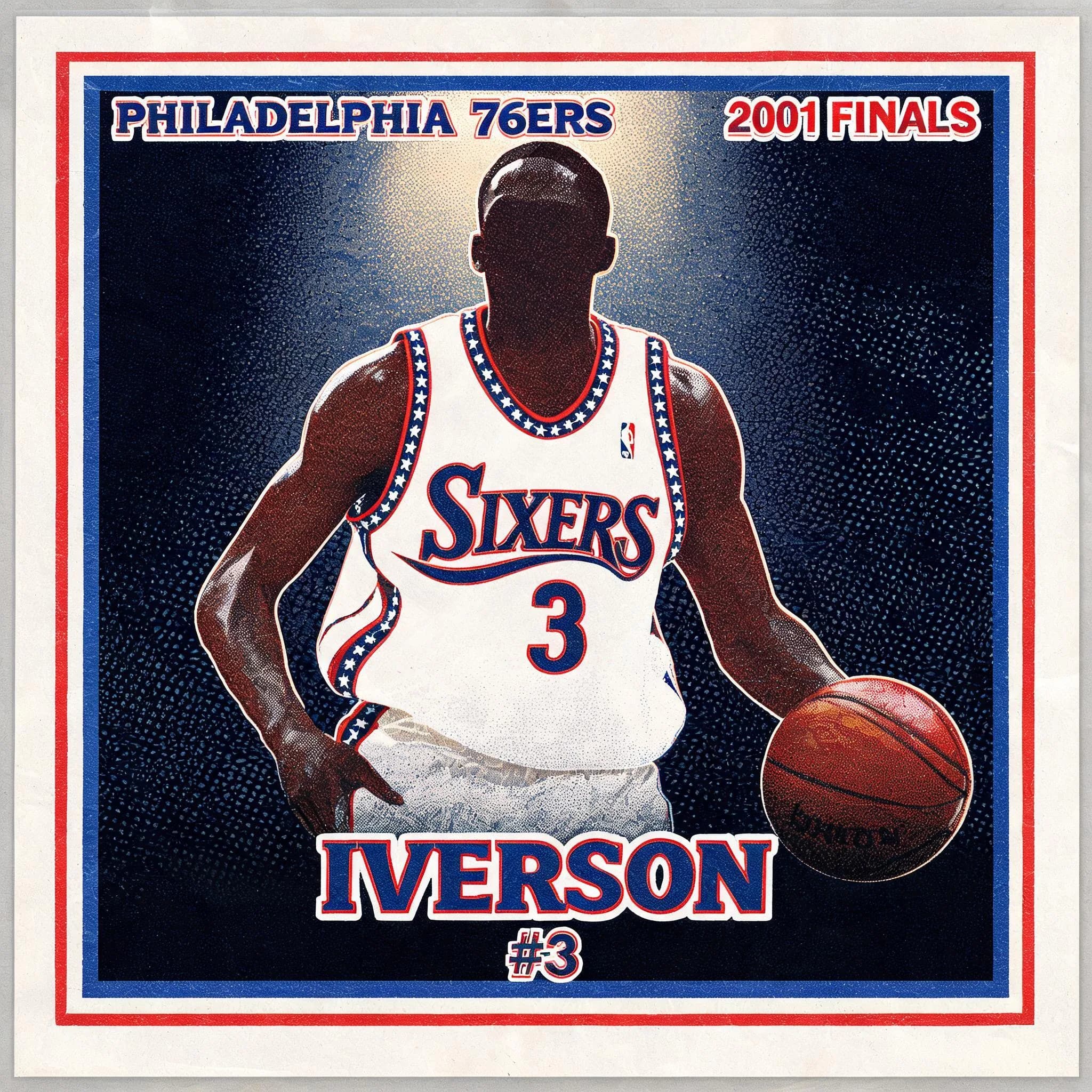
Allen Iverson stood six feet tall — generously measured — and 165 pounds soaking wet. He should not have been an NBA superstar. He certainly should not have been an MVP. And he absolutely should not have become the single most influential figure in basketball fashion history.
But Allen Iverson did not care what he should have been.
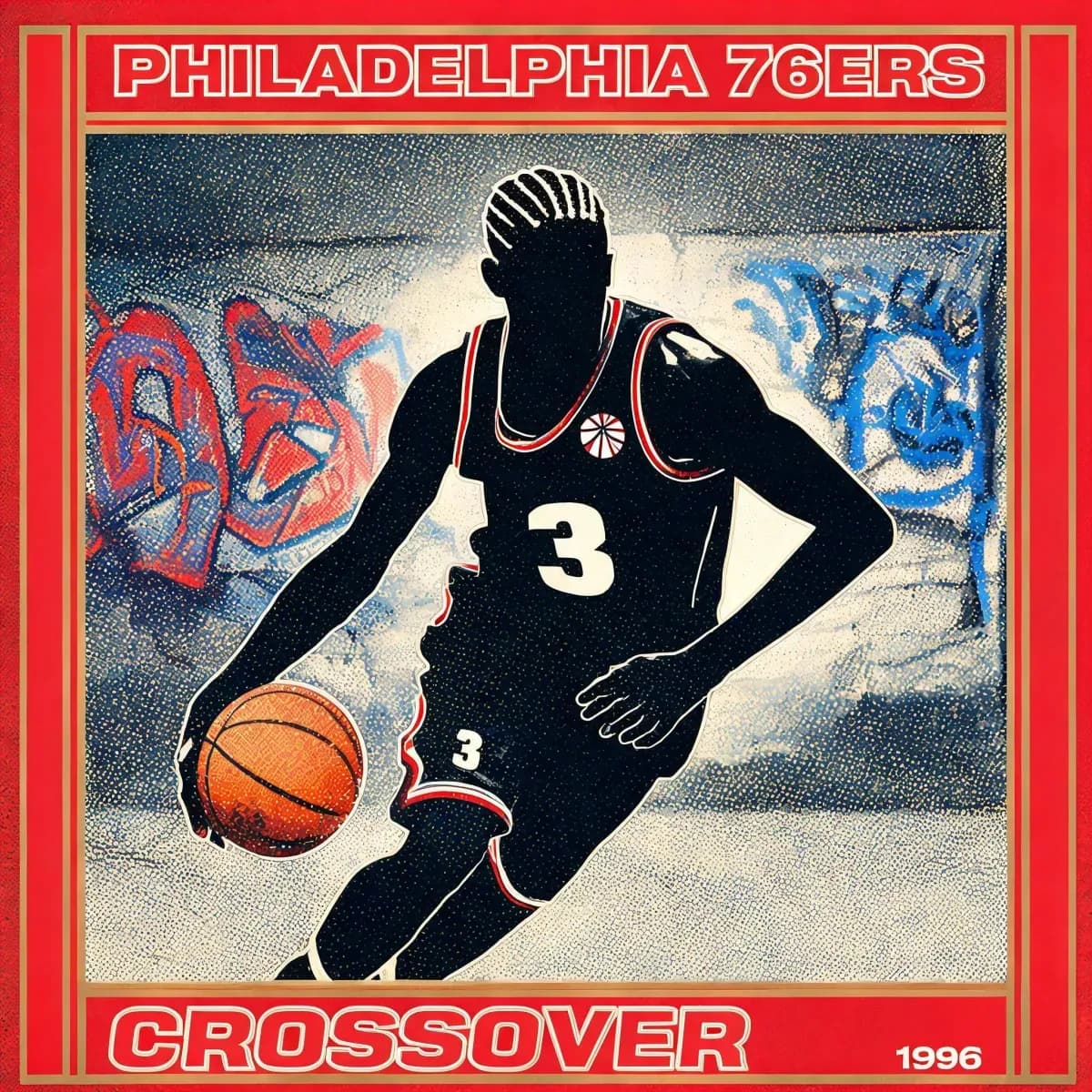
When Iverson walked into his first NBA press conference in 1996 wearing cornrows, baggy jeans, and Timberland boots, the league's old guard recoiled. David Stern would eventually institute a dress code specifically targeting players who dressed like AI. The irony: Iverson's aesthetic — the oversized jerseys, the arm sleeves, the headbands, the tattoos visible beneath the uniform — became the default look of the 2000s NBA. He didn't break the rules. He rewrote them.
Why AI Jerseys Are Streetwear, Not Just Sportswear
Here is what separates Allen Iverson's jersey market from almost every other player: his jerseys were adopted by hip-hop culture while he was still playing. Jay-Z wore the black 76ers jersey in music videos. Nas wore it courtside. The Diplomats wore it on album covers.
This crossover wasn't retroactive nostalgia — it was real-time cultural adoption. And it means that AI jersey collectors today span two distinct demographics: basketball fans who remember the stepover, and streetwear enthusiasts who associate the black 76ers jersey with early-2000s New York hip-hop.
That dual demand base creates pricing resilience. When basketball-specific hype cycles cool, the streetwear floor holds prices steady. When streetwear trends shift, basketball collectors maintain demand. The AI jersey market has two pillars holding it up. Most players have one.
The Dress Code Jersey
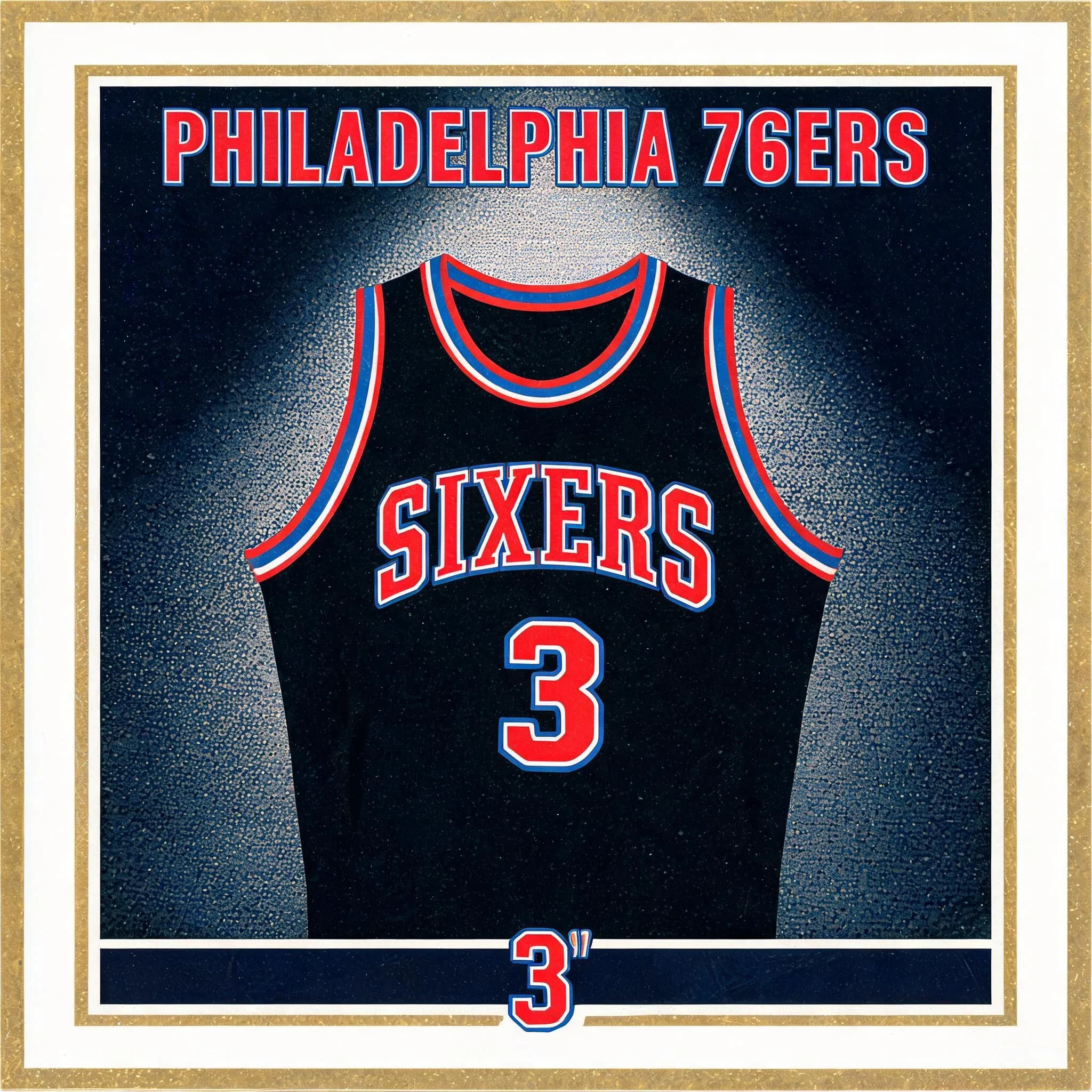
The Philadelphia 76ers black alternate — introduced in 1997, worn prominently by Iverson from 1997-2006 — is arguably the most culturally significant jersey design of the post-Jordan era. It broke three rules simultaneously:
Black as primary. Before the 76ers black alternate, NBA teams treated black jerseys as novelty items. After Iverson made it iconic, every franchise in the league added a black alternate within five years.
Stars as motif. The white stars running down the sides referenced the Philadelphia flag but read as pure graphic design. It was a jersey that worked as a poster, a fashion piece, a cultural statement.
Oversized as intentional. Iverson famously wore his jersey two sizes too large. The billowing fabric became part of his identity — a visual rebellion against the fitted, tucked-in aesthetic of the Jordan era. Mitchell & Ness now sells "AI Cut" versions that replicate the intentionally oversized drape.
The Collection
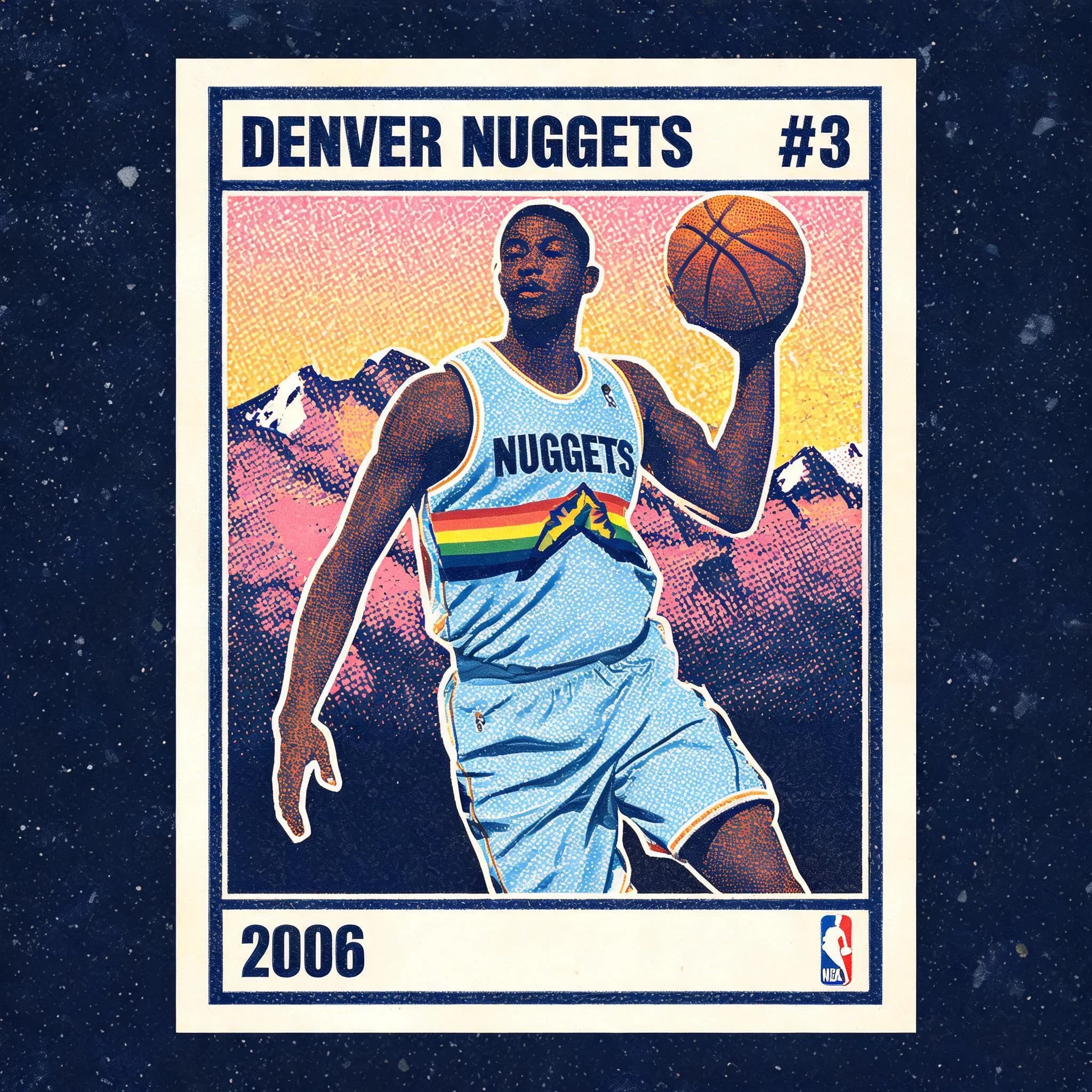
Below you'll find deep dives into Iverson's most iconic jerseys — from the culture-shifting 76ers black to the underrated Nuggets rainbow throwback. Each covers authentication, pricing, and the cultural context that makes these pieces more than sportswear.