JerseyTome Research Team
May 9, 2026 · 10 min read· Verified collectors & authenticators
The Night Cleveland Believed
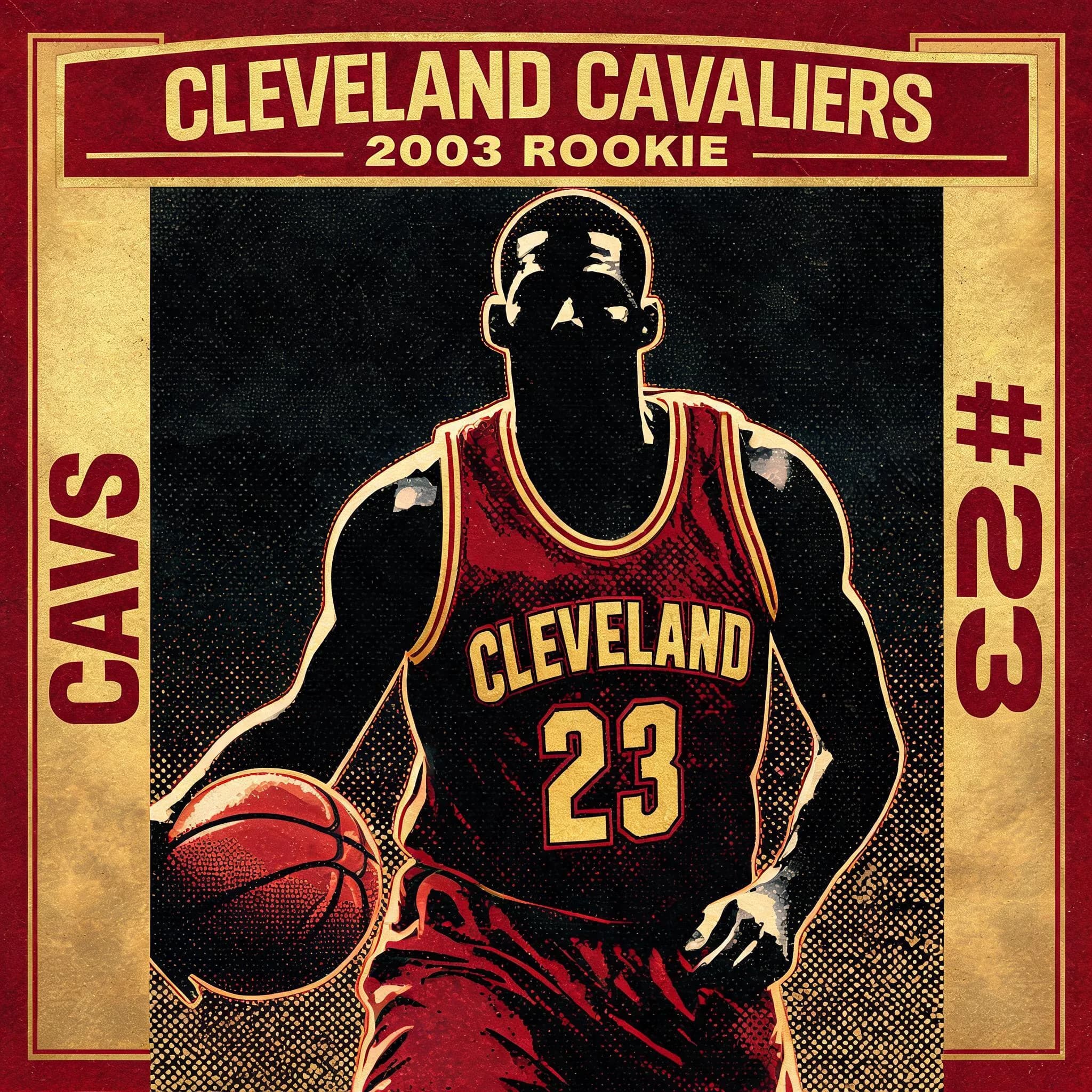
June 26, 2003. The NBA Draft. Everyone knew. The Cleveland Cavaliers held the first pick, and Akron's own LeBron James — the most hyped prospect in basketball history — was coming home. When commissioner David Stern announced the pick, the Gund Arena erupted. A franchise that had won 17 games the previous season suddenly had a future.
The wine-and-gold #23 became the uniform of that hope. Cleveland hadn't made the playoffs since 1998. They hadn't won anything since — well, ever. LeBron James in Cavaliers wine and gold represented something beyond basketball: a Rust Belt city's belief that greatness could come from within.
LeBron's Cavaliers jersey became the NBA's #1 seller within three weeks of being drafted — before he'd played a single game. Only Zion Williamson (2019) has matched that pre-debut demand, and even Zion's spike didn't last as long.
The Destruction Premium
On July 8, 2010, LeBron announced on ESPN that he was "taking his talents to South Beach." Within hours, videos of jersey burnings flooded YouTube. Fans in Cleveland, Akron, and across Ohio threw LeBron jerseys into fire pits, ran them over with trucks, and shredded them on camera.
The rage was real. And so was its market consequence.
Conservative estimates suggest 10,000-30,000 LeBron Cavaliers jerseys were destroyed that night and in the weeks following. For a jersey that was mass-produced — Reebok and Adidas made millions — that number might seem insignificant. But the destroyed jerseys were disproportionately nice ones. Fans burning a jersey on TV were burning their authentic, not their cheap replica. The $150 pieces went into the fire. The $30 knockoffs stayed in closets.
This selective destruction means surviving authentic-tier pre-Decision jerseys (Reebok Authentic, Adidas Revolution 30) are meaningfully scarcer than production numbers suggest. The market reflects this: a 2003-2010 Cavaliers #23 authentic consistently trades at 25-40% above equivalent Miami-era pieces.
“I burned mine on my front lawn at midnight. I wish I hadn't. That jersey is worth more than my couch now.”
— Reddit user on r/clevelandcavs, 2024
Reebok vs. Adidas Eras
LeBron's first Cleveland stint spans two manufacturers:
Reebok era (2003-2006): The early jerseys feature Reebok's mesh template with a more traditional cut. These are the scarcest because Reebok's NBA license ended in 2006, creating a closed production window. A deadstock Reebok Authentic LeBron #23 with tags is a legitimate grail — fewer than a few hundred are estimated to remain in unworn condition.
Learn proper storage techniques in our jersey care guide.
Adidas era (2006-2010): The Revolution 30 template — lighter mesh, slimmer cut, climate-control technology. More abundant than Reebok pieces because Adidas produced them at higher volume, but still subject to The Decision destruction event. The 2007 Finals jersey (Cavaliers vs. Spurs) carries an extra narrative premium as LeBron's first Finals appearance.
Authentication Markers
-
Reebok tags (2003-2006): Look for the vector logo tag inside the collar and the size/wash tag on the left hem. Fakes often use a generic Reebok wordmark instead of the vector logo.
-
Adidas jock tag (2006-2010): Holographic NBA logo that shifts from silver to rainbow when tilted. The climacool mesh has a distinct hexagonal weave pattern visible under magnification.
-
Number stitching: Authentic #23 uses multi-layer tackle twill — wine base, gold outline. Run your finger over the number; you should feel distinct raised layers.
-
Wine color accuracy: Cavaliers wine is a specific deep burgundy (not maroon, not crimson). Fakes consistently miss this — they're either too red or too brown.
The Collector Strategy
The pre-Decision Cleveland LeBron jersey is the single best value play in his entire jersey market. Here's why:
- Scarcity is real (not artificial — actual destruction event)
- Mitchell & Ness reproductions exist but are clearly marked as modern
- When LeBron eventually retires, this era will be romanticized as "The Beginning"
- Cleveland's 2016 championship redemption arc has already elevated the nostalgia factor
Buy Reebok-era if you can find one. Settle for Adidas-era if you can't. Avoid current Mitchell & Ness reproductions for long-term value — they're great for wearing but won't hold resale value like originals.
Design Deep Dive — Anatomy of the Wine & Gold
The 2003 Cavaliers rebrand was deliberate. When LeBron was drafted, the franchise knew they were building an identity around a generational talent, and the visual package had to match the ambition. The previous Cavaliers color scheme — a brighter blue-and-orange holdover from the mid-1990s — was abandoned entirely in favor of a return to the franchise's original wine-and-gold palette, but with modern refinements.
The wine tone chosen for the LeBron era is technically a deep burgundy, darker and richer than the original 1970s Cavaliers wine. Pantone references place it close to PMS 209, a color with significant red depth that photographs differently under arena lights than it appears in hand. This is one reason counterfeits fail so consistently on color — reproducing this specific shade requires dye-lot precision that knockoff manufacturers rarely achieve.
The gold is a true metallic gold, not yellow. On the Reebok template, the gold numbering and lettering have a slightly warmer tone compared to the Adidas era, which shifted to a marginally cooler gold. Side by side, the difference is subtle but noticeable — and it's one of the quickest ways to date a jersey to its correct manufacturing window without checking the tag.
The "CAVALIERS" wordmark across the chest uses a custom-drawn sans-serif typeface with angular terminals — a deliberate choice to evoke a modern, aggressive tone. The number font is similarly custom, with slightly exaggerated proportions designed to be readable from upper-deck seating. On Reebok authentics, the lettering is multi-layer tackle twill with a wine base layer, gold top layer, and a thin wine outline. This three-layer construction is time-consuming to replicate, which is why most fakes use single- or double-layer screen printing that feels flat to the touch.
The side panels on the Reebok template feature a contrasting gold mesh insert that runs from the armhole to the hem — a design element that was removed in the Adidas transition. Collectors who specifically want the "LeBron's rookie year" look should verify this gold side panel is present, as it dates the jersey firmly to the 2003-2006 window.
Game Moments That Define This Jersey
Certain games have become inseparable from the visual of LeBron in wine and gold. These moments drive narrative premium in the collector market:
The NBA debut — October 29, 2003 vs. Sacramento Kings. LeBron scored 25 points, grabbed 6 rebounds, dished 9 assists, and had 4 steals in his first NBA game. He wore the home white jersey that night, not the wine, but the debut created the demand shockwave that made every Cavaliers LeBron jersey a commodity overnight. The rookie season as a whole is the origin story for the wine-and-gold's collectible status.
The 2007 Eastern Conference Finals — Game 5 vs. Detroit. LeBron scored the Cavaliers' final 25 points, including the game-winner in double overtime — 48 points total on the road. He wore the white road jersey for this game, but this performance elevated the entire Cavaliers LeBron jersey market because it was the moment he transcended "promising young player" and became "unstoppable force." Every wine-and-gold piece from the 2006-07 season carries a trace of this game's significance.
The 2007 NBA Finals vs. San Antonio. Cleveland was swept, and LeBron was clearly outmatched by a superior Spurs team. But these were LeBron's first Finals jerseys — and "first Finals" has its own premium in the memorabilia world. A 2007 Finals-patched wine-and-gold (if such a piece exists in retail authentic form) would trade at a significant premium over a standard regular-season piece from the same year.
The 2008-2009 MVP season. LeBron's first MVP year cemented Cleveland's relevance. The Cavaliers posted the NBA's best record (66-16), and LeBron averaged 28.4 points, 7.6 rebounds, and 7.2 assists. Jerseys from this season often carry extra sentimental value for Cleveland fans who remember it as the year they truly believed a championship was possible.
Comparison: Cavaliers Wine & Gold vs. Cavaliers Return Navy (2014-2018)
Collectors often debate which Cleveland LeBron era is the better buy. The answer depends on your thesis:
The wine-and-gold (2003-2010) has scarcity driven by the jersey bonfire event. Supply is permanently reduced. But the era ended in betrayal — The Decision left a scar on the franchise's identity, and some collectors associate the wine-and-gold with an unfulfilled promise. The jerseys from this period are "the prodigy who left."
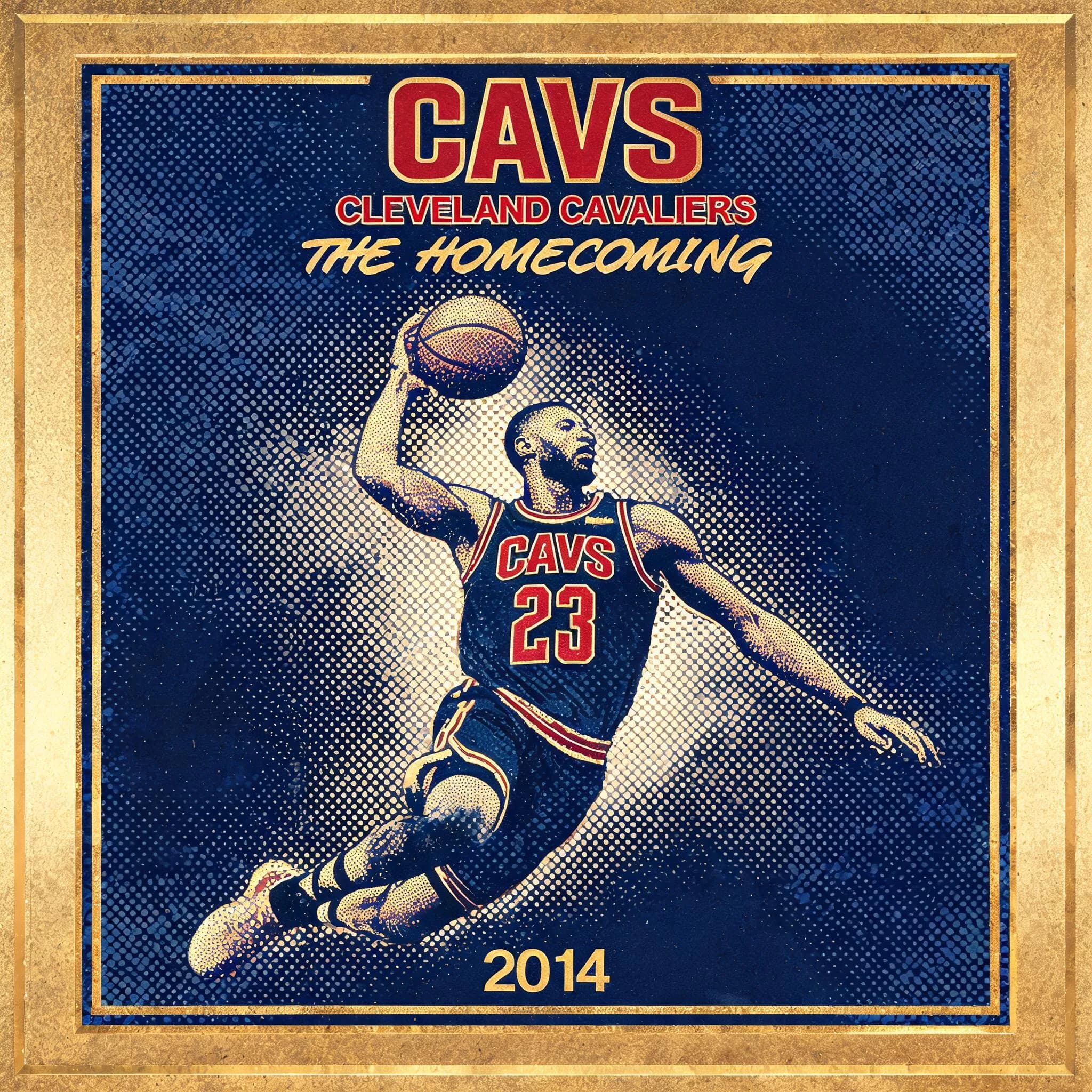
The navy return-era jersey (2014-2018) has the championship. The 2016 title — coming back from 3-1 against the 73-win Warriors — is arguably the greatest single achievement in NBA Finals history. The navy jersey was what LeBron wore when he delivered the block, the shot, and the championship that Cleveland had waited 52 years for. But these jerseys were mass-produced by Nike/Adidas in much higher quantities, and no mass-destruction event reduced the supply.
For pure investment: the wine-and-gold has better supply-demand dynamics. For emotional resonance: the navy return jersey has the championship moment. A complete LeBron collection needs both, but if you can only buy one original-era piece, the wine-and-gold Reebok authentic offers the better long-term scarcity argument.
This jersey is featured in our 2026 investment guide.
Condition Grading and Storage Tips
Preserving a vintage LeBron Cavaliers jersey requires attention to the specific materials used in each era:
Reebok-era jerseys: The mesh on Reebok authentics is a polyester blend that holds up well over time but is susceptible to yellowing if stored in direct light or humid conditions. Store flat in acid-free tissue paper, not on a hanger — hanging can stretch the shoulder seams over decades. Keep the jersey in a dark, temperature-controlled space. If you must display it, use a UV-protective frame and rotate the displayed piece annually to limit light exposure.
Adidas-era jerseys: The Revolution 30 mesh is lighter and more prone to pilling along the side seams if worn frequently. For display pieces, the same UV-frame advice applies. For jerseys you intend to wear, hand-wash in cold water with mild detergent — machine washing, even on delicate, can damage the tackle twill stitching over time.
For all eras: Never iron directly on the lettering or numbers. If wrinkles are an issue, steam from a distance or place a thin cotton cloth between the iron and the jersey surface. Store jerseys away from rubber, adhesive, or PVC — these materials can off-gas chemicals that yellow or degrade polyester over time.
Where to Buy
Affiliate links — we earn a small commission at no extra cost to you. Prices as of last update; click through for current pricing.
Acquire This Jersey
Affiliate links — we earn a small commission at no extra cost to you.
Resale Price Trend
+16.7%Collector Tools
Affiliate disclosure: Some links earn us a small commission at no extra cost to you. We only recommend products we'd buy ourselves.