JerseyTome
Player Legend / 1980s

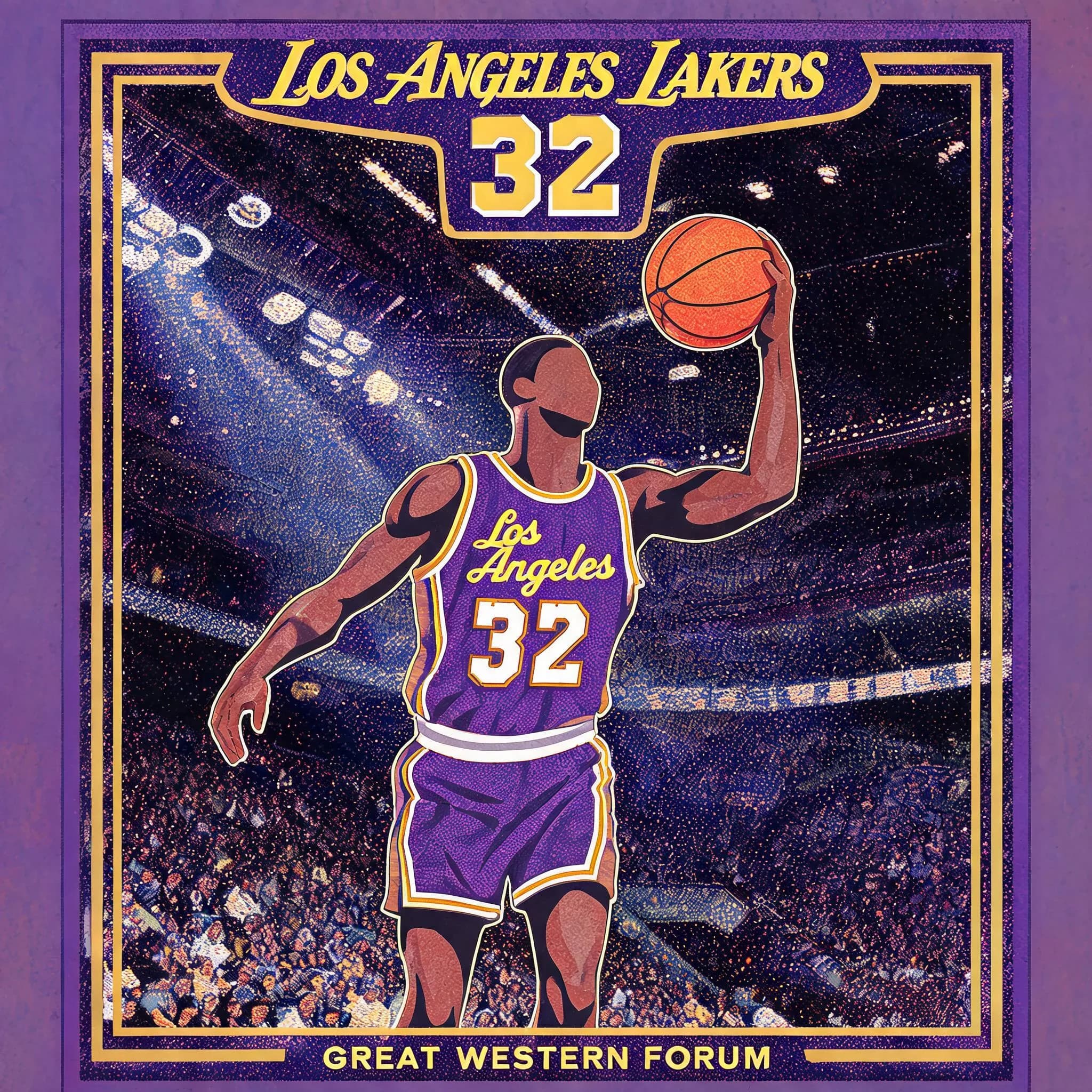
The Rivalry Uniform — Magic's Lakers Purple Road

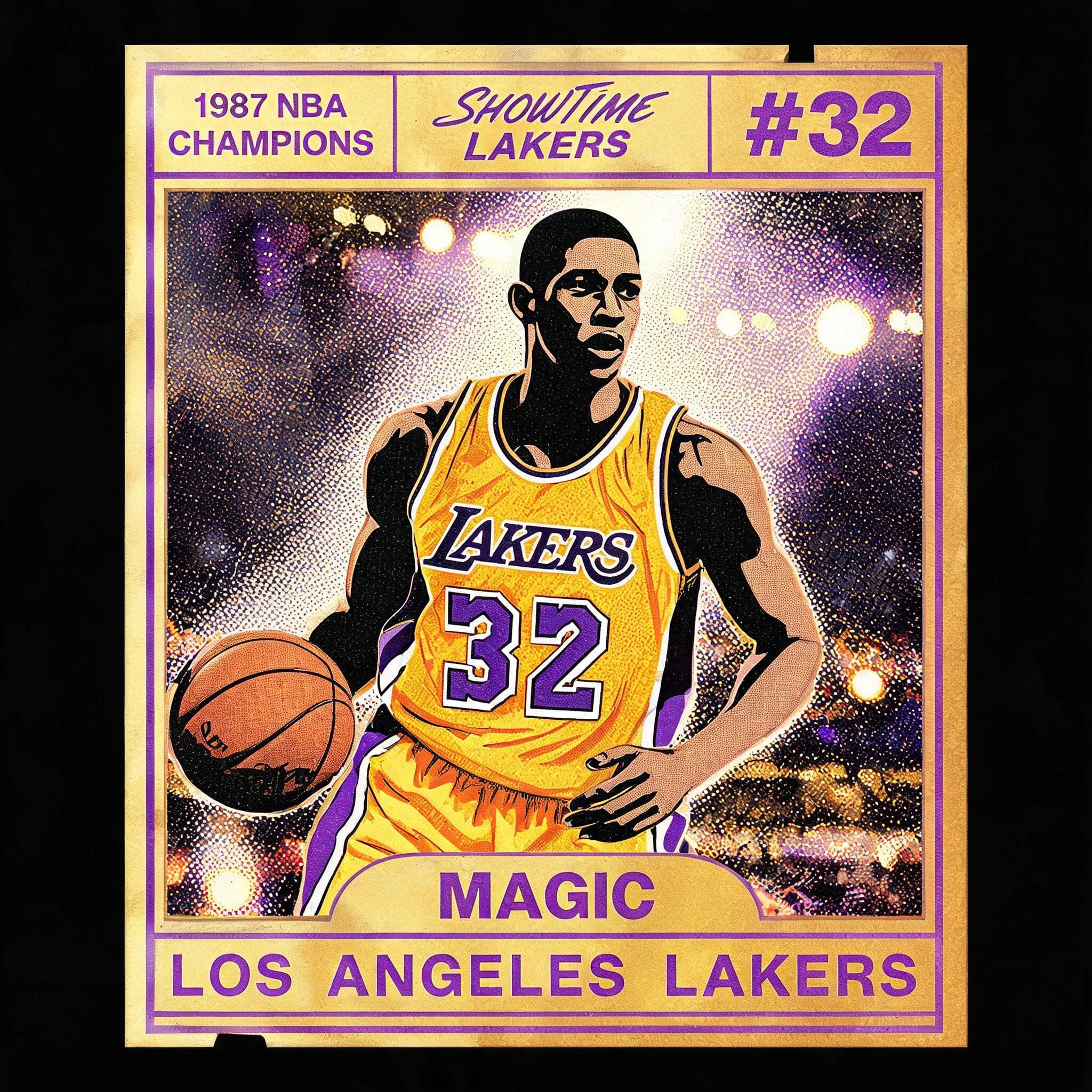
Magic Johnson in purple means one thing: Boston. The Lakers-Celtics rivalry was fought on the road, in hostile arenas, wearing away purple. This is the jersey of basketball's greatest war.

3
Finals vs. Boston
2
Road Championships
1987 G4
Sky Hook
The Rivalry Uniform — Magic's Lakers Purple Road

The Away Game

The Showtime Lakers are remembered as a home-court spectacle — the Forum, the celebrities, the glamour. But championships are won on the road. And the 1980s NBA Finals were defined by one road trip: Los Angeles to Boston.

Magic Johnson in purple, playing in Boston Garden, against Larry Bird and the Celtics. This was the greatest rivalry in basketball history, and every chapter of it played out with Magic wearing the Lakers' purple road jersey in the most hostile environment in sports.

1984 Finals: Magic's nadir. The Lakers lost in seven games. He turned the ball over in crunch time of Game 7. Boston fans chanted "Tragic Johnson." He was wearing purple for the worst moment of his career.

1985 Finals: Redemption. The Lakers beat the Celtics on their floor — the "Memorial Day Massacre" (Game 1, 148-114) and the Game 6 clincher at Boston Garden. Magic won Finals MVP. Purple was the redemption jersey.

1987 Finals: The masterpiece. Magic averaged 26, 13, and 8 across six games. The junior sky hook in Game 4. The series clinch in Game 6. Purple was the coronation jersey.

The Rivalry Context

To understand the purple jersey's significance, you need to understand what Boston Garden meant to the 1980s Lakers:

The parquet floor — uneven, bouncing unpredictably in spots known only to the Celtics. The dead spots in the court where the ball didn't bounce right. The lack of air conditioning — Red Auerbach allegedly turned off the AC for visiting teams. The crowd — the most hostile, knowledgeable, relentless crowd in basketball.

Magic in purple at Boston Garden was a declaration of intent: we're here to beat you in your building, under your conditions, in front of your people. The purple jersey meant "road warrior." And Magic's greatest achievements — breaking the Celtic mystique in 1985, the sky hook in 1987 — happened in exactly those conditions.

There was nothing in basketball like walking into Boston Garden in that purple uniform. They hated you. The building was designed to beat you. And Magic would just smile and go to work.

Byron Scott, Magic's teammate, on road games in Boston

Purple as the Rivalry Jersey

The Lakers-Celtics Finals featured a specific visual language:

For collectors interested in the rivalry narrative specifically — the Magic vs. Bird story that saved the NBA in the 1980s — purple is the correct jersey. It's the jersey Magic wore when the stakes were highest and the environment was most hostile. Every defining road moment of his career happened in purple.

The Value Proposition

Purple trades at a 20-30% discount to gold for Magic Johnson. This creates an opportunity:

The discount exists because: Home gold is "the" Showtime jersey in cultural memory. The Forum lights. The Nicholson courtside. The celebration imagery. Gold is what people visualize first.

The discount is illogical because: The purple jersey has arguably stronger narrative moments. The 1985 Boston Garden title. The 1987 sky hook. The road warrior identity. Championships are won on the road, and Magic won two of his five on enemy floors wearing purple.

The smart play: Purple pieces offer the same vintage authenticity, the same era scarcity, and stronger road-moment narratives at a lower price point. For collectors who prioritize narrative depth over canonical imagery, purple is underpriced.

Authentication

Authentication for purple Magic jerseys follows the same manufacturer timeline as gold:

  1. Sand-Knit (1979-1986): Knit fabric, durex lettering, Sand-Knit collar label. Purple should be a true royal purple — not blue-purple or red-purple. Gold numbers/letters in a warm tone.

  2. MacGregor (1986-1990): Mesh fabric, tackle twill. MacGregor collar label. The 1987 Finals pieces (sky hook game) are from this era.

  3. Champion (1990-1991): Mesh, Champion "C" collar logo. Magic's final season only.

  4. Number construction: #32 in gold on purple base. The gold should be the same warm yellow-gold used on the home jersey — continuity across colorways.

  5. Condition notes for vintage: Purple fabric from the 1980s often shows fading — especially Sand-Knit pieces that were washed repeatedly. Some fading is expected and authentic. A 40-year-old piece in "too perfect" condition may be a reproduction.

Where to Buy

Affiliate links — we earn a small commission at no extra cost to you. Prices as of last update; click through for current pricing.

Resale Price Trend

+20.0%
$420$3502024-Q12025-Q2

Affiliate disclosure: Some links earn us a small commission at no extra cost to you. We only recommend products we'd buy ourselves.

Frequently Asked Questions

Why is the purple road jersey associated with the Celtics rivalry?

The Lakers and Celtics met in the Finals three times during Magic's career (1984, 1985, 1987). All road Finals games — played at Boston Garden — were in purple. Magic's most iconic rivalry moments (the 1985 championship clinch, the 1987 junior sky hook) happened in purple on Boston's floor.

Is the purple jersey cheaper than gold?

Yes — approximately 20-30% cheaper for equivalent pieces. The Showtime identity is more strongly associated with home gold, making purple the value play for collectors who want a Magic Lakers piece at a lower entry point.

What's 'the junior sky hook' and why does it matter?

In Game 4 of the 1987 Finals, Magic hit a running hook shot over Robert Parish and Kevin McHale with 2 seconds left to win the game. He was wearing purple. It's considered one of the greatest shots in Finals history and cemented Magic's reputation as a big-moment player.

The Weekly Tome

One retro jersey story, every week. No spam. Unsubscribe anytime.

Join the collector community. Free forever.