JerseyTome Research Team
May 9, 2026 · 7 min read· Verified collectors & authenticators
El regreso imposible
25 de septiembre de 2001. Dos semanas después del 11 de septiembre, Michael Jordan — 38 años, tres años retirado, con una participación como propietario que tendría que entregar — anunció que regresaba a jugar para los Washington Wizards. El mundo reaccionó con una mezcla de emoción, confusión y temor.
No se suponía que esto pasara. El Último Tiro se suponía que era el final. Jordan en rojo, elevándose sobre Russell, el balón cayendo por la red, alejándose en la cima. Esa era la conclusión perfecta de la carrera perfecta. El regreso con los Wizards fue el epílogo que nadie pidió.
Pero Jordan promedió 22.9 puntos por partido en su primera temporada con los Wizards. A los 38 años. Con las rodillas deterioradas. Con compañeros que no eran dignos de cargar su bolsa de gimnasio. Anotó 51 puntos contra Charlotte a los 38 años. Encestó tiros ganadores. Demostró, una vez más, que su voluntad competitiva era sobrehumana — incluso si su cuerpo era finalmente, innegablemente, mortal.
La camiseta azul de los Wizards es la camiseta de esa contradicción: el mejor jugador de todos los tiempos, negándose obstinadamente a aceptar el veredicto del tiempo.
El caso contrario
La camiseta de los Wizards es la pieza más infravalorada del mercado de Jordan, y el argumento es directo:
El descuento es enorme. Una auténtica de la era Wizards se comercializa por $150-250. Una pieza equivalente de los Bulls se comercializa por $400-600. Eso es un descuento del 60-75% por el mismo jugador, el mismo número, en un contexto legítimo de la NBA.
La narrativa está cambiando. En 2003, el regreso con los Wizards se veía como triste — un gran jugador disminuyendo su legado. En 2026, la narrativa ha evolucionado. Promediar 20+ PPG a los 38 ahora se reconoce como uno de los mayores logros atléticos en la historia del baloncesto. Tom Brady jugó hasta los 45; LeBron está jugando a los 41. Jordan haciéndolo a los 38 estaba adelantado a su tiempo. El regreso se ve mejor cada año.
La producción fue baja. Los Wizards eran un equipo malo con poca demanda de merchandising. Las camisetas de Jordan con los Wizards se vendieron bien en relación con los Wizards, pero terriblemente en relación con el merchandising de los Bulls. Existen menos piezas en el mercado de lo que la gente asume.
Las piezas usadas en partido ya se están moviendo. Una camiseta de Jordan usada en partido con los Wizards se vendió por $173,000 en Goldin Auctions en 2023. El extremo alto del mercado ya reconoce el valor. Las piezas de venta al público aún no se han puesto al día.
Jordan donó su salario completo con los Wizards — aproximadamente $1 millón por temporada — a los esfuerzos de ayuda para las víctimas del 11 de septiembre, empleados del Pentágono y sus familias. Combinado con su filantropía post-carrera, la era de los Wizards representa a Jordan en su momento más generoso. Este contexto se incorpora cada vez más al legado del regreso.
Dos temporadas, dos historias
2001-02 (38 años): 60 partidos, 22.9 PPG, 5.7 RPG. Jordan fue legítimamente excelente. Encestó tiros ganadores. Cargó a un plantel mediocre a relevancia competitiva. La rodilla cedió en febrero — se perdió los últimos 22 partidos. Sin la lesión, Washington podría haber llegado a los playoffs.
2002-03 (39-40 años): 82 partidos (jugó todos — la terquedad). 20.0 PPG, 6.1 RPG. El cuerpo se deterioraba visiblemente. Pero todavía tenía noches — 45 contra New Jersey, 43 contra Indiana. El último partido: 16 de abril de 2003, en Philadelphia. 15 puntos, 4 asistencias, una ovación de pie de un público rival. El verdadero final.
La primera temporada con los Wizards tiene más atractivo para coleccionistas — las estadísticas fueron mejores, la narrativa fue "Jordan demostrando que los escépticos se equivocaban." La segunda temporada es más oscura — se trata de un hombre que no se detenía. Ambas son fascinantes. Ninguna es lo que llamarías "triste" si realmente ves los highlights.
La camiseta azul como objeto
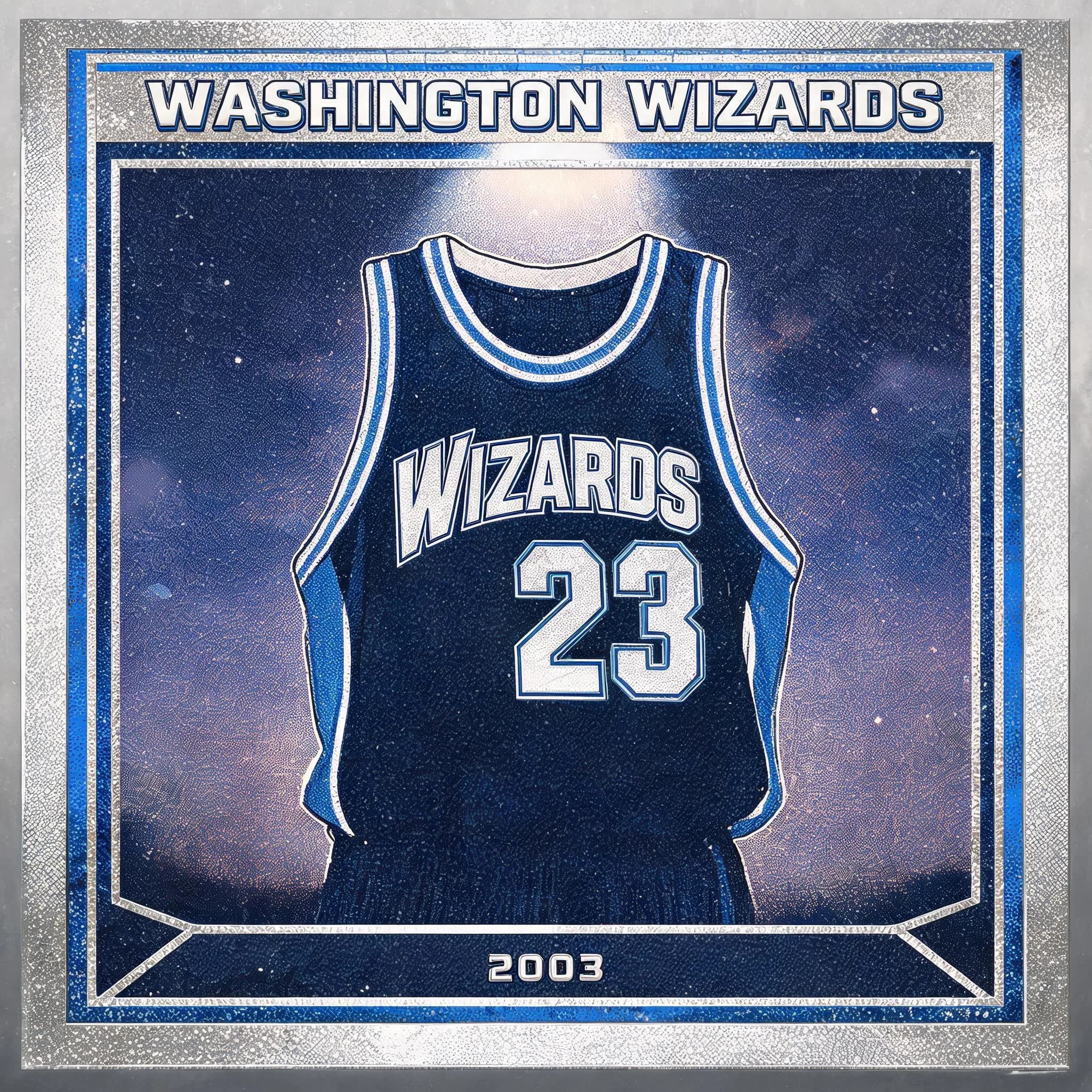
La plantilla de los Wizards 2001-2003:
Base azul marino: Un azul marino verdadero — más oscuro que la mayoría de los azules de la NBA. Limpio, corporativo, poco notable. Los Wizards estaban en una fase de reconstrucción en todos los sentidos, incluyendo su identidad de marca.
Acentos dorados: Ribetes del cuello y panel lateral en dorado metálico. Logotipo "WIZARDS" a través del pecho en dorado con contorno blanco. El dorado añade calidez a lo que de otra forma sería un diseño frío.
#23 en dorado: El número que define el deporte estadounidense, representado en el dorado metálico de los Wizards. Visualmente distinto de la versión blanco-sobre-rojo de los Bulls — esto parece un jugador diferente a primera vista, que es en parte la intención.
La virtud del diseño: No intenta ser icónico. No compite con el rojo de los Bulls por significado cultural. Es una camiseta limpia de la NBA que resulta que tiene al atleta más famoso de la historia usándola. La sobriedad es apropiada para lo que esta era representó — Jordan como jugador de baloncesto, despojado de mitología.
“No estoy tratando de ser el viejo Michael Jordan. Estoy tratando de ser Michael Jordan a los 38. Y Michael Jordan a los 38 todavía es mejor que la mayoría de la liga.”
— Michael Jordan, conferencia de prensa de 2001
Quién colecciona esta camiseta
La camiseta de los Wizards atrae un perfil específico de coleccionista:
Completistas: Coleccionistas que quieren cada era de Jordan representada. No puedes contar la historia completa sin Washington. Es el capítulo final.
Contrarios: Coleccionistas que específicamente buscan piezas infravaloradas. El descuento de los Wizards es la ineficiencia de mercado más obvia en memorabilia de baloncesto. El dinero inteligente está acumulando silenciosamente.
Coleccionistas enfocados en la historia: Personas que valoran la complejidad narrativa por encima de los highlights. Los años con los Wizards cuentan una historia más humana que la dinastía de los Bulls — una historia sobre el envejecimiento, el ego, la adicción competitiva y lo que sucede cuando un dios descubre que es mortal. Algunos coleccionistas encuentran eso más atractivo que otro campeonato.
Coleccionistas jóvenes: Personas que eran niños durante la era de los Wizards y realmente recuerdan haber visto jugar a Jordan. Para ellos, Jordan con los Wizards ES su Jordan. A medida que esta generación entra en sus años de mayores ingresos (2025-2035), se espera que la demanda aumente.
Autenticación
-
Plantilla Nike (2001-2003): Swoosh de Nike en el pecho izquierdo, logoman de la NBA en el hombro derecho. Construcción en malla Dri-FIT. Las piezas de nivel auténtico tienen tela bordada multicapa.
-
Champion (para throwbacks): Algunas piezas de réplica/venta al público de esta era usaron la plantilla de Champion. Revisa las etiquetas del cuello cuidadosamente — las piezas Champion generalmente son menos valiosas que las auténticas de Nike.
-
Construcción del número: #23 en dorado con contorno blanco sobre base azul marino. Tela bordada multicapa con ancho de dígitos limpio y consistente.
-
Talla (usada en partido): Jordan usaba 48-50 con los Wizards — ligeramente más grande que su 46-48 de la era Bulls, probablemente acomodando rodilleras y prendas de compresión debajo.
-
Parches de la camiseta: Busca el parche conmemorativo del 11-S de la NBA (bandera estadounidense) en el hombro derecho durante la temporada 2001-02. Este parche autentica la temporada y añade significado histórico.
Where to Buy
Affiliate links — we earn a small commission at no extra cost to you. Prices as of last update; click through for current pricing.
Acquire This Jersey
Affiliate links — we earn a small commission at no extra cost to you.
Resale Price Trend
+42.9%Herramientas para Coleccionistas
Divulgación de afiliados: Algunos enlaces nos generan una pequeña comisión sin costo adicional para ti. Solo recomendamos productos que compraríamos nosotros mismos.