JerseyTome
이 페이지는 아직 번역되지 않았습니다. 영어 버전을 표시합니다.
Player Legend / 2000s

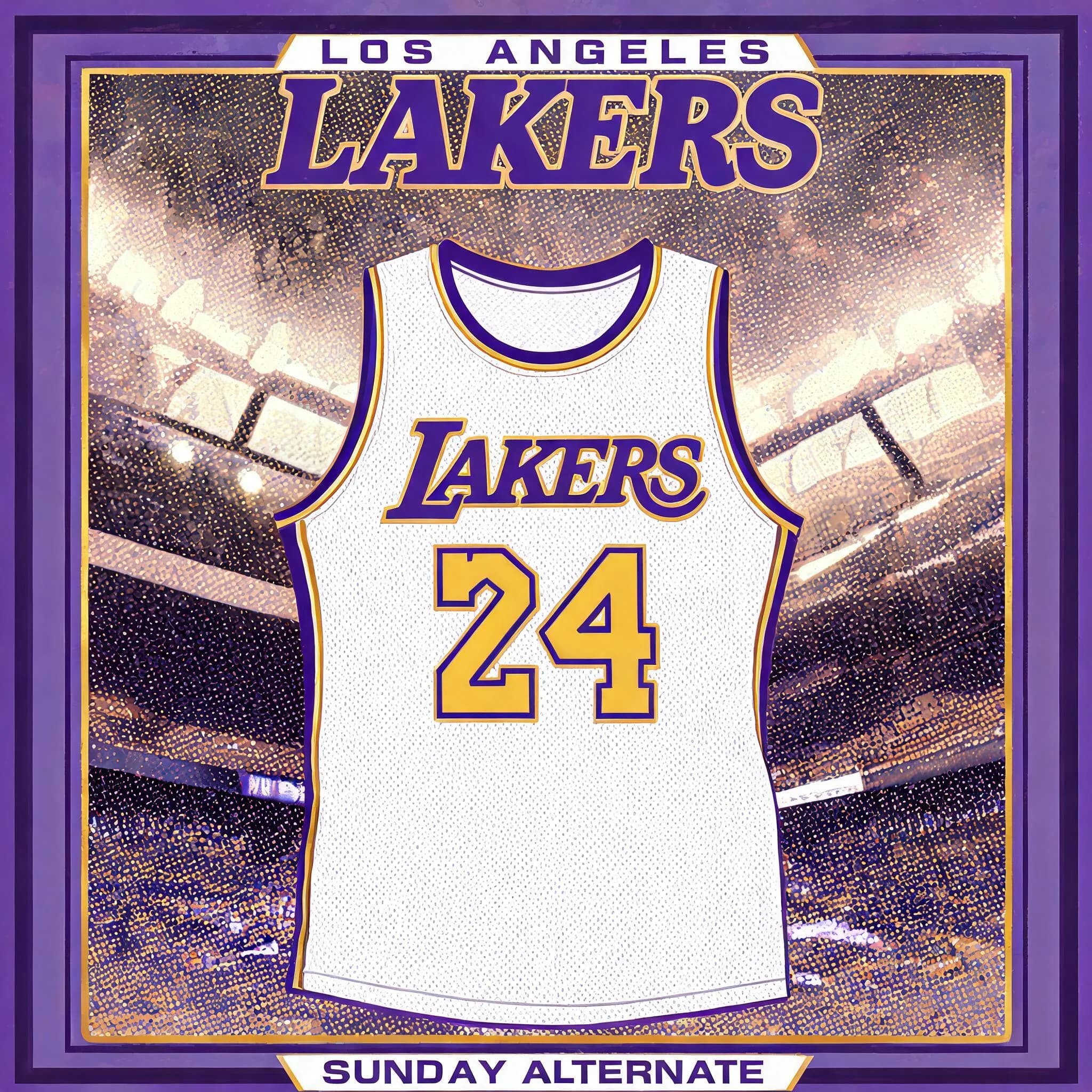
Kobe Bryant Lakers Purple Road Jersey — The Three-Peat #8 That Built a Dynasty

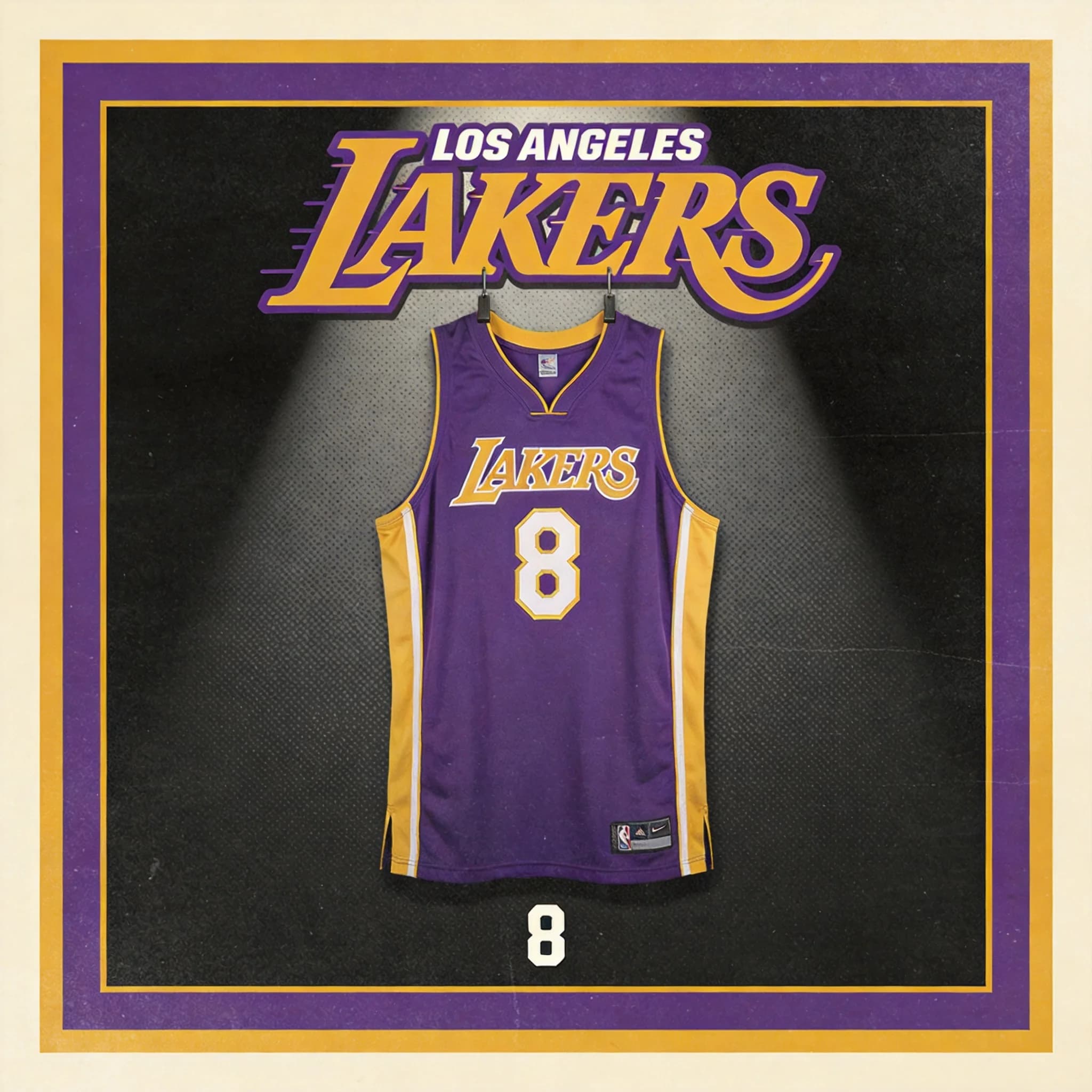
Between 2000 and 2002, Kobe wore purple on the road while collecting three straight championship rings alongside Shaq. This is the jersey that turned a teenage prodigy into a proven winner — and the road colorway makes it the rarer half of the dynasty era.

3-peat
Championships
#8
Jersey Number
104-38
Road Record
Kobe Bryant Lakers Purple Road Jersey — The Three-Peat #8 That Built a Dynasty
Share
JT

JerseyTome Research Team

May 10, 2026 · 15 min read· Verified collectors & authenticators

The Road to Three Straight

Every dynasty has a uniform. The 1990s Bulls had the red and black. The 1980s Celtics had parquet-floor green. And between 2000 and 2002, the Los Angeles Lakers wore deep purple on the road while dismantling the rest of the NBA three years running — the last three-peat in league history.

The gold home jerseys get the nostalgia. They get the Staples Center roars, the confetti shots, the banner-raising ceremonies. But the purple road jerseys are where the Lakers won those championships. Where Kobe Bryant, wearing #8 with a Nike Swoosh on his chest and a basketball IQ far beyond his 21 years, walked into hostile arenas across the country and helped destroy every team that stood between Los Angeles and a dynasty.

Portland. Sacramento. Indiana. Philadelphia. New Jersey. All of them fell to a Lakers team wearing purple. If you collect the gold, you collect the celebration. If you collect the purple, you collect the conquest.

Road Warriors

During the 2000-2002 three-peat, the Lakers posted a combined road record of 104-38 in the regular season and 24-5 in road playoff games. Kobe Bryant averaged 27.6 points per game on the road during the 2001 playoffs — the postseason run where the Lakers went 15-1, the most dominant playoff performance in NBA history. Every one of those road wins came in purple.

The Jersey: Anatomy of a Dynasty-Era Design

The 2000-2001 Lakers purple road jersey sits at the intersection of two eras in NBA uniform design. It was one of the first full seasons under Nike's NBA jersey template, replacing the Champion-manufactured jerseys of the late 1990s. The result was a cleaner, more athletic silhouette — but one that still carried the classic Lakers DNA that stretches back to the Showtime era of Magic Johnson.

The colorway is unmistakable: a deep, saturated purple that reads almost royal under arena lights, accented by warm metallic gold for the "LAKERS" wordmark across the chest and the #8 on front and back. The color combination wasn't just aesthetic — it was territorial. No other NBA team has ever used this exact purple-and-gold pairing. The Lakers own it the way Tiffany owns robin's-egg blue.

Design Breakdown

The purple base: Not the blue-shifted purple of the Sacramento Kings, not the red-shifted purple of the Phoenix Suns' old alternates. Lakers purple is its own Pantone — a true, balanced purple that photographs beautifully and holds its depth whether seen courtside or on a television broadcast from 2001. On authentic vintage pieces, the dye has often aged into an even richer tone, making 20-year-old originals slightly more visually striking than brand-new Mitchell & Ness reissues.

The gold lettering: "LAKERS" across the chest in the franchise's signature block serif font, outlined in a thin white border that gives the letters lift against the purple field. The number 8 on the front is centered below the wordmark, matching the same gold-with-white-outline treatment. On the back, a larger #8 sits above "BRYANT" in the same font system. The lettering is fully stitched on authentic pieces — not screen-printed, not heat-pressed. You can feel the raised embroidery with your fingers, and on vintage authentic jerseys, the slight texture of the stitching is one of the primary authentication markers.

The Nike Swoosh: Embroidered on the upper left chest in white. This was the early Nike NBA era, before the Swoosh became oversized or repositioned in later template revisions. The 2000-2001 Swoosh sits clean and proportional — visible but not dominant. Counterfeit jerseys from this era frequently get the Swoosh wrong: too thick, wrong angle, or screen-printed instead of embroidered.

The side panels: The Nike template introduced subtle mesh side panels in a slightly lighter purple, running from the armhole down to the hem. These ventilation panels were a functional upgrade over the Champion-era construction and give the jersey a more modern profile when worn. They're also a useful authentication detail — knockoffs often skip the dual-tone side panel treatment entirely or use the wrong mesh weight.

The collar and trim: A simple V-neck cut with gold-and-white piping along the collar edge. No ornamental details, no extra branding. The Lakers' identity was strong enough that the jersey could stay clean. The simplicity is part of what makes the design timeless — twenty-five years later, it doesn't look dated the way some early-2000s NBA designs do. Compare it to the Toronto Raptors' pinstripe era or some of the busier designs from that period, and the Lakers purple reads like a tailored suit next to a costume.

The purple jersey was always special because it meant we were in someone else's building. It meant we came to take something. Gold was home. Purple was war.

Kobe Bryant, Showtime documentary interview (2012)

The Shaq and Kobe Three-Peat: Context for the Jersey

You cannot understand this jersey without understanding the partnership that defined it. From 2000 to 2002, the Los Angeles Lakers were the most dominant force in basketball — and the most volatile. Shaquille O'Neal was the most physically imposing center since Wilt Chamberlain. Kobe Bryant was the most ambitious young player since Michael Jordan. Together, they were unstoppable. Apart, they were constantly at war.

The 2000 Championship: Kobe's first ring. The Lakers beat Indiana 4-2 in the Finals, with Shaq winning Finals MVP. But it was Kobe's Game 4 performance — 28 points after Shaq fouled out — that announced him as a co-star, not a sidekick. He was 21 years old, wearing #8, wearing purple on the road in Indiana for the clinching games.

The 2001 Championship: The greatest single playoff run in NBA history. The Lakers went 15-1 across four rounds, sweeping Portland, Sacramento (after a dramatic five-game series the year before), San Antonio's twin towers, and Allen Iverson's Philadelphia 76ers. The only loss? Game 1 of the Finals, when Iverson famously stepped over Tyronn Lue. The Lakers won the next four in a row. Kobe averaged 29.4 points per game that postseason. He was 22. The purple road jersey was on his back for every away win in that historic run.

The 2002 Championship: The conclusion of the three-peat. New Jersey never stood a chance in the Finals — the Lakers swept 4-0. But the real war was the Western Conference Finals against Sacramento, a seven-game blood feud that remains one of the most controversial series in NBA history (Game 6 free-throw disparities are still debated in barbershops two decades later). Kobe dropped 30+ in three of those seven games. In purple.

Why Purple Over Gold: The Collector's Case

The standard advice for any Lakers jersey collector is to buy gold — it's the home jersey, the more recognizable colorway, the one you see in every highlight reel. That advice is wrong if you're collecting for value rather than for display.

Supply dynamics favor purple. During the three-peat era, retail jersey sales skewed heavily toward the gold home colorway. Fans buy what they see on home broadcasts, and the Lakers' massive local fanbase (Southern California, the entertainment industry, the global celebrity machine) overwhelmingly purchased gold. Purple road jerseys were produced in lower retail quantities and sold primarily to out-of-market fans and collectors who specifically wanted the away look.

Twenty years later, that production imbalance has compounded. Fewer purple jerseys were made, fewer survived (jerseys worn regularly fade and degrade — gold shows wear more gracefully than purple, which tends to fade unevenly), and fewer entered the secondary market in collectible condition.

Championship clinch moments happened on the road. The Lakers clinched the 2000 championship in Indiana (purple), the 2001 championship in Philadelphia (purple), and played critical road games throughout every playoff run. The gold jersey is associated with home crowds and home celebrations. The purple jersey is associated with winning the trophy. For the collector who wants the jersey that was actually on the court when championships were decided, purple is the correct answer.

Scarcity is accelerating. As original vintage Nike #8 purple jerseys from 2000-2002 continue to degrade, get lost, or enter permanent private collections, the available supply on eBay and consignment platforms shrinks every year. Mitchell & Ness reissues provide a new-production alternative, but they don't scratch the same itch for collectors who want the original Nike template with the correct era details.

Authentication Guide: Purple #8 Specifics

Kobe Bryant jerseys are the second-most counterfeited in the NBA market, behind only Michael Jordan. The purple #8 from the three-peat era presents specific authentication challenges because the originals are 20+ years old and the design has been widely reproduced.

What to Check on a Vintage Nike Authentic

The jock tag: The interior label on authentic Nike jerseys from 2000-2002 uses a specific font and layout. The size label, care instructions, and barcode should all match the year of claimed production. Nike changed its jock tag format slightly each year — a 2001 jock tag is distinguishable from a 2000 or 2002 version. If the jock tag looks generic or matches a post-2005 Nike format, the jersey is either mislabeled or counterfeit.

The purple dye: Authentic Lakers purple from this era has a specific depth and warmth. It's a true purple — balanced between red and blue — with a slight warm lean. The most common counterfeit error is a purple that skews too cold (too much blue) or too flat (no depth under varied lighting). Hold the jersey under daylight and then under warm incandescent light — authentic Lakers purple shifts subtly warmer under incandescent. Cheap dyes don't shift.

The gold lettering: On authentic pieces, the gold used for "LAKERS" and "#8" is a warm, slightly muted metallic gold — not bright yellow, not orange-gold. The lettering is multi-layer embroidered on authentic jerseys: a base layer of gold thread with a white outline border. Run your thumb across the numbers — you should feel distinct raised edges where the outline meets the gold fill.

The Nike Swoosh: Embroidered, not printed. The stitching should be tight, with the Swoosh's tail tapering cleanly to a point. On counterfeits, the Swoosh tail often ends bluntly or shows loose threads at the termination point.

The mesh weight: Authentic Nike jerseys from this era use a heavyweight polyester mesh that has a specific drape and hand feel. It's stiffer and more substantial than the lighter mesh Nike uses in modern Swingman jerseys. Counterfeits almost universally use a cheaper, lighter mesh that feels flimsy by comparison. If you've ever handled a real one, the difference is unmistakable.

The Championship Patch Premium

Some three-peat era purple jerseys include a gold NBA Finals patch on the left chest or a championship commemorative patch. Jerseys with these patches — verified as period-correct, not aftermarket additions — command a 30-50% premium over identical jerseys without patches. However, aftermarket patch additions are extremely common in this market. Examine the stitching around any patch carefully: original patches were sewn during manufacturing with the same thread tension as the rest of the jersey. Patches added later typically show slightly different thread color, tension, or backing material.

Buying Guide: Where to Find Authentic Pieces

eBay: The largest marketplace for vintage Kobe #8 purple jerseys. Use filters for "Nike Authentic" and check seller ratings obsessively. Expect to pay $150-300 for verified vintage authentic pieces in good condition. Watch for listings that use stock photos instead of actual product photos — legitimate sellers photograph the specific jersey they're selling, including close-ups of the jock tag and stitching.

StockX / GOAT: Both platforms have expanded into vintage jerseys. Authentication is handled by the platform, which reduces (but doesn't eliminate) counterfeit risk. Prices tend to run 10-20% higher than eBay due to the authentication guarantee and platform fees.

Mitchell & Ness (direct): For new-production reissues, buying direct from Mitchell & Ness guarantees authenticity and gives you access to their full size run. The M&N Hardwood Classics version of Kobe's purple #8 retails around $300 and is the highest-quality new-production option available. It won't appreciate like a vintage original, but it will look correct on display and hold its retail value well.

Consignment shops (Round Two, Uptown Cheapskate, local): Physical consignment stores occasionally receive vintage Kobe jerseys. The advantage is you can inspect the piece in hand before purchasing. The disadvantage is selection is random and unpredictable.

Auction houses (Heritage, Sotheby's, Goldin): For game-worn or pro-cut pieces, major auction houses are the primary channel. These pieces come with formal letters of authentication and photo-matching documentation. Prices start in the tens of thousands and climb from there.

Sizing Notes

Mitchell & Ness Hardwood Classics jerseys run true to size but have a longer, boxier cut than modern Nike jerseys. If you're between sizes, size down for a more tailored fit. The authentic version (as opposed to the Swingman) uses a heavier mesh that doesn't stretch much — it holds its shape but won't conform to your body the way a lighter jersey does.

For vintage Nike pieces, the 2000-era sizing runs slightly smaller than modern equivalents. A vintage XL is closer to a modern Large in body width, though the length is comparable. Always check the jock tag measurements against your own if buying online.

The Cultural Weight of Purple and Eight

The Kobe #8 purple Lakers jersey occupies a specific emotional territory in basketball culture. It's not the first Kobe jersey (that's the 1996-97 rookie purple, which commands an even higher premium). It's not the most famous Kobe jersey (that's arguably the #24 gold from the 2010 Finals against Boston). But it might be the most meaningful Kobe jersey for a specific generation of fans — the ones who watched the three-peat happen in real time.

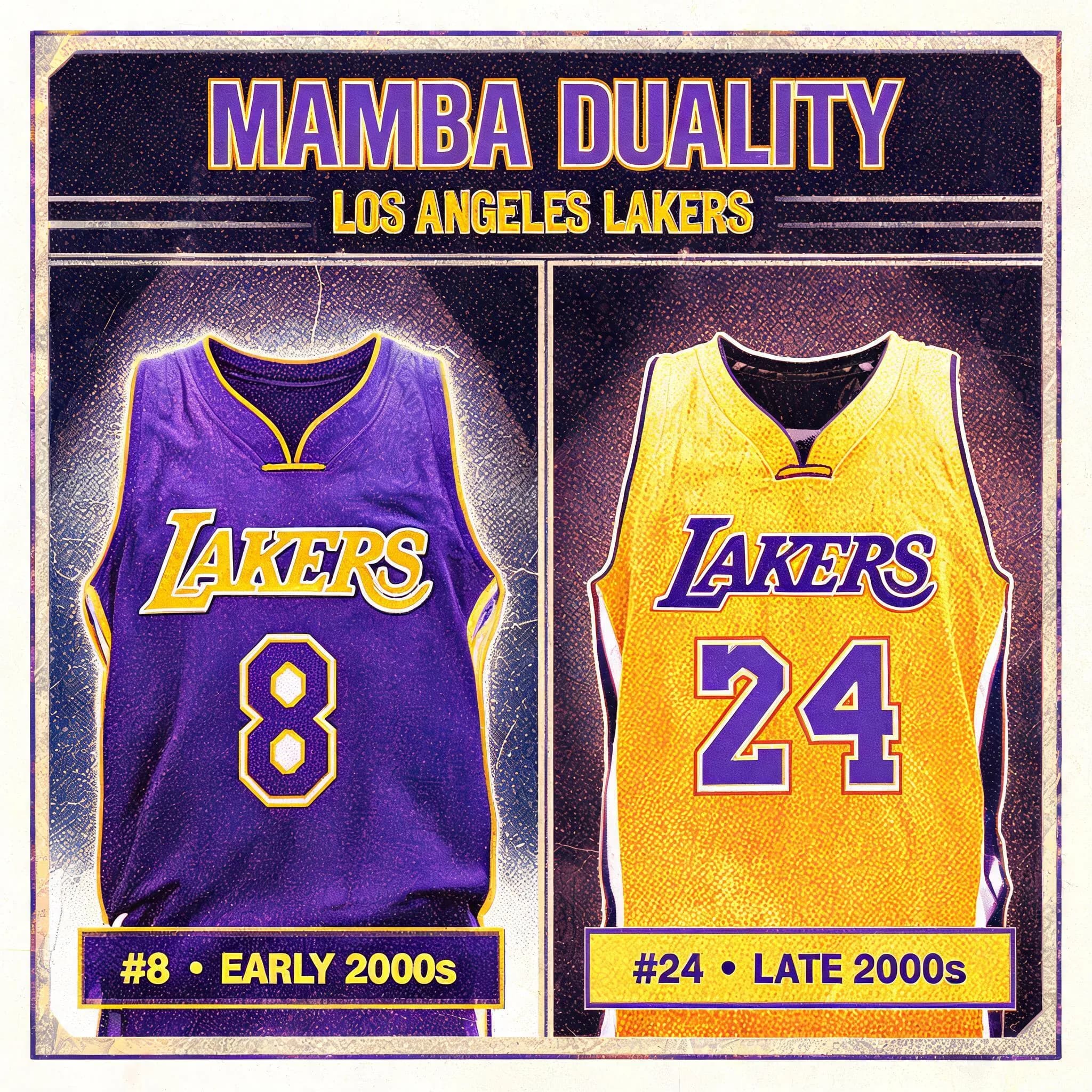
If you were twelve years old in 2001, watching Kobe and Shaq dismantle the league on your parents' television, the purple #8 is the jersey burned into your memory. It's the jersey from the era when Kobe was still ascending, still sharing the stage, still figuring out how to be a champion rather than a legend. The #8 vs #24 debate will rage forever, but the purple road jersey from the three-peat adds a third dimension to that conversation: it's not just about which number — it's about which color.

Gold is celebration. White is ceremony. Purple is the work.

The 2000-2001 Lakers purple road jersey is the work uniform of the last NBA three-peat. Kobe wore it into Portland, into Sacramento, into Philadelphia, into every arena that wanted to stop the dynasty. They couldn't. The jersey survived those battles. And twenty-five years later, the ones that are still intact carry the weight of that history in every fiber.

If you're going to own one Kobe jersey from the dynasty era, the gold home is the safe choice. The purple road is the right one.

Those purple jerseys, man. Every time we put them on for a road game, it was like putting on armor. We knew we were walking into somebody else's house. And we knew we were going to take everything they had.

Rick Fox, Lakers forward (2000-2004), on the Knuckleheads Podcast

Where to Buy

Affiliate links — we earn a small commission at no extra cost to you. Prices as of last update; click through for current pricing.

Acquire This Jersey

Affiliate links — we earn a small commission at no extra cost to you.

Resale Price Trend

+29.4%
$220$1702024-Q12025-Q2

제휴 공시: 일부 링크를 통해 소액의 수수료를 받을 수 있으며, 추가 비용은 발생하지 않습니다. 직접 구매할 제품만 추천합니다.
자주 묻는 질문

Why is the Kobe Bryant Lakers purple jersey rarer than the gold?

The purple jersey was the Lakers' road uniform. During the three-peat era (2000-2002), gold home jerseys outsold purple road variants by roughly 3-to-1 in retail because fans overwhelmingly buy home colorways. That purchasing imbalance, combined with 20+ years of attrition, means surviving authentic purple #8 jerseys are significantly scarcer in the secondary market. Expect to pay a 20-40% premium over equivalent gold pieces.

How can I tell if a Kobe #8 purple Lakers jersey is authentic?

For Nike-era purple jerseys (1999-2006), check the jock tag for the correct Nike font, barcode format, and year-specific sizing label. The purple colorway should be a deep, true purple — not shifted toward blue or red. Stitched lettering should show tight, clean embroidery with no loose threads. The gold 'LAKERS' wordmark and numbering should be a warm metallic gold, not bright yellow. The Nike Swoosh on the left chest should be cleanly embroidered, not screen-printed.

Is the 2000-2001 Kobe purple jersey a good investment?

Championship-era Kobe jerseys have appreciated steadily since 2020 and show no sign of correcting. The purple road variant benefits from lower supply than gold, direct association with three championships, and Kobe's enduring cultural legacy. Authentic vintage pieces from this era have seen 8-12% annual appreciation. Mitchell & Ness reissues hold value well but don't appreciate at the same rate as original vintage Nike pieces.

같은 시대 다른 선수의 저지

Free for Collectors

Price Alerts & Authentication Tips

Get notified when jersey prices drop, plus weekly authentication guides from verified collectors. Join 2,000+ subscribers.

No spam. Unsubscribe anytime. Free forever.