The Man Who Made a Country Watch Basketball
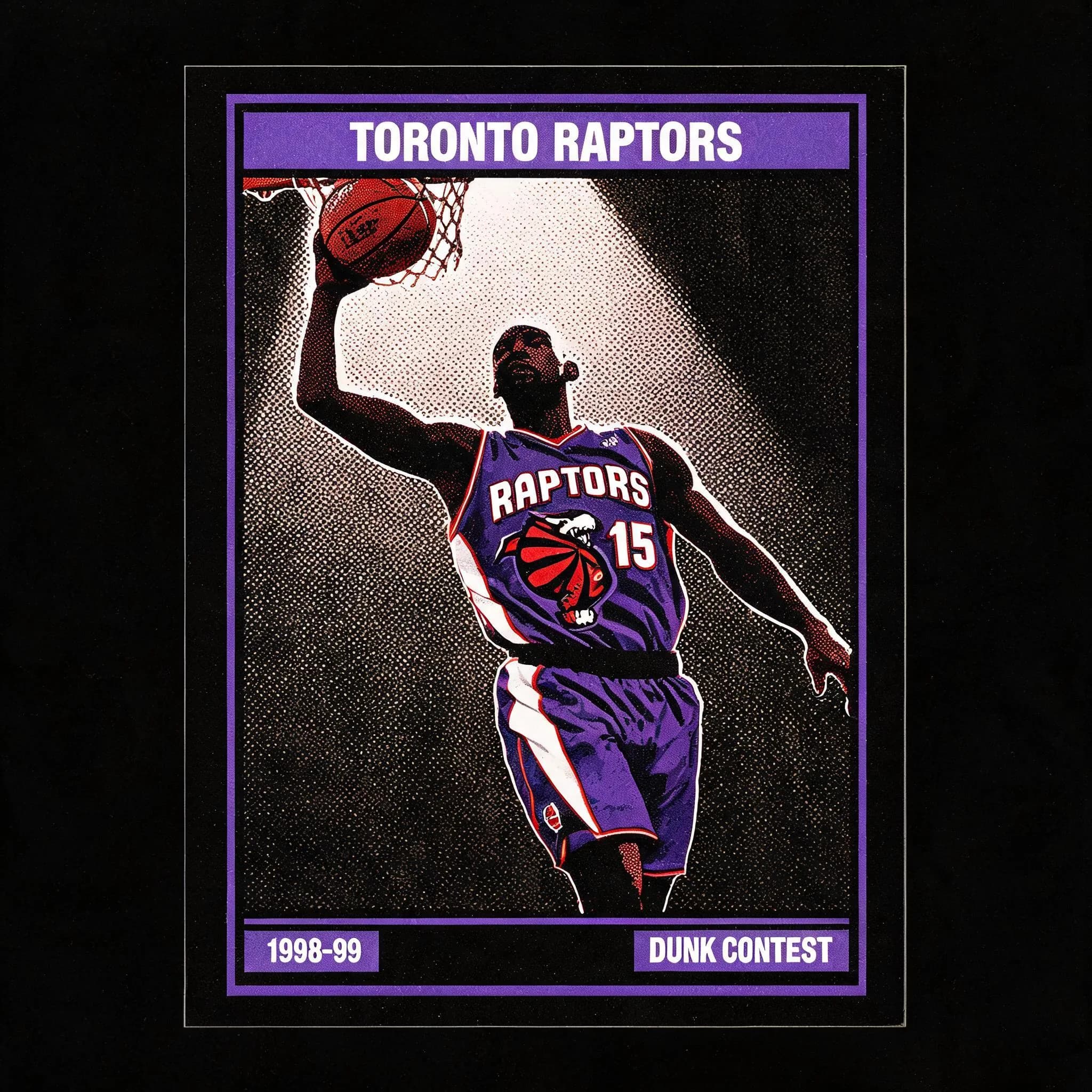
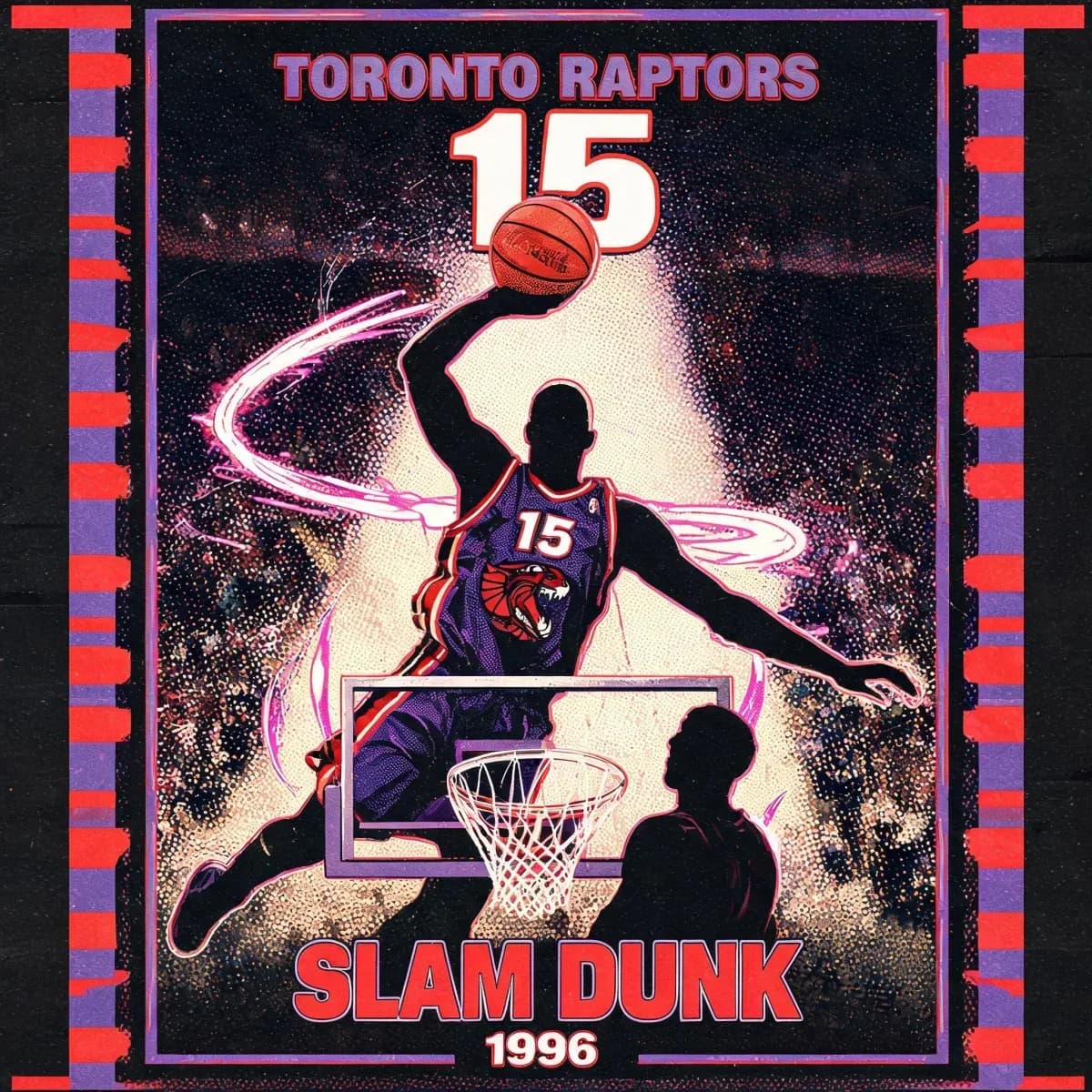
On February 12, 2000, Vince Carter walked into the NBA Slam Dunk Contest at the Oakland Arena and performed what is still considered the greatest single athletic exhibition in basketball history. The 360 windmill. The between-the-legs from the free throw line. The elbow-in-the-rim that made the judges hold up tens before he'd even landed.
He was wearing a Toronto Raptors jersey. Purple, with a dinosaur dribbling a basketball. It should have looked absurd. Instead, that jersey became the single most iconic piece of NBA merchandise from the year 2000 — and the foundation of basketball culture in an entire country.
Before Vince Carter, the Toronto Raptors were an expansion franchise playing in front of half-empty arenas. After the dunk contest, they sold out every home game for the next four years. Carter didn't just sell jerseys; he sold a sport to Canada. The purple Raptors #15 is, for an entire generation of Canadian basketball fans, their first sports memory.
The Dinosaur Premium
The original Raptors jersey design — purple base, red accents, the cartoon dinosaur logo — was retired in 2006 when the franchise rebranded. That retirement created a closed design window: 1995-2006. Carter wore the dinosaur-era jersey from 1998-2004, giving collectors a six-season production run.
The nostalgia market for this design has exploded since 2018, driven by two forces. First, Mitchell & Ness began producing "Hardwood Classics" reproductions, re-introducing the design to a generation that was too young to buy it originally. Second, the Raptors' 2019 championship — won in an entirely different jersey — created a wave of franchise-wide nostalgia that elevated all vintage Raptors designs.
Authentic game-worn Carter Raptors jerseys from 1998-2004 trade at $8,000-$25,000 depending on season, provenance, and whether the game was televised. The dunk contest jersey itself — if it ever came to market — would likely exceed $500,000 based on comparable sales of iconic moment-specific jerseys.
The Pinstripe Alternate
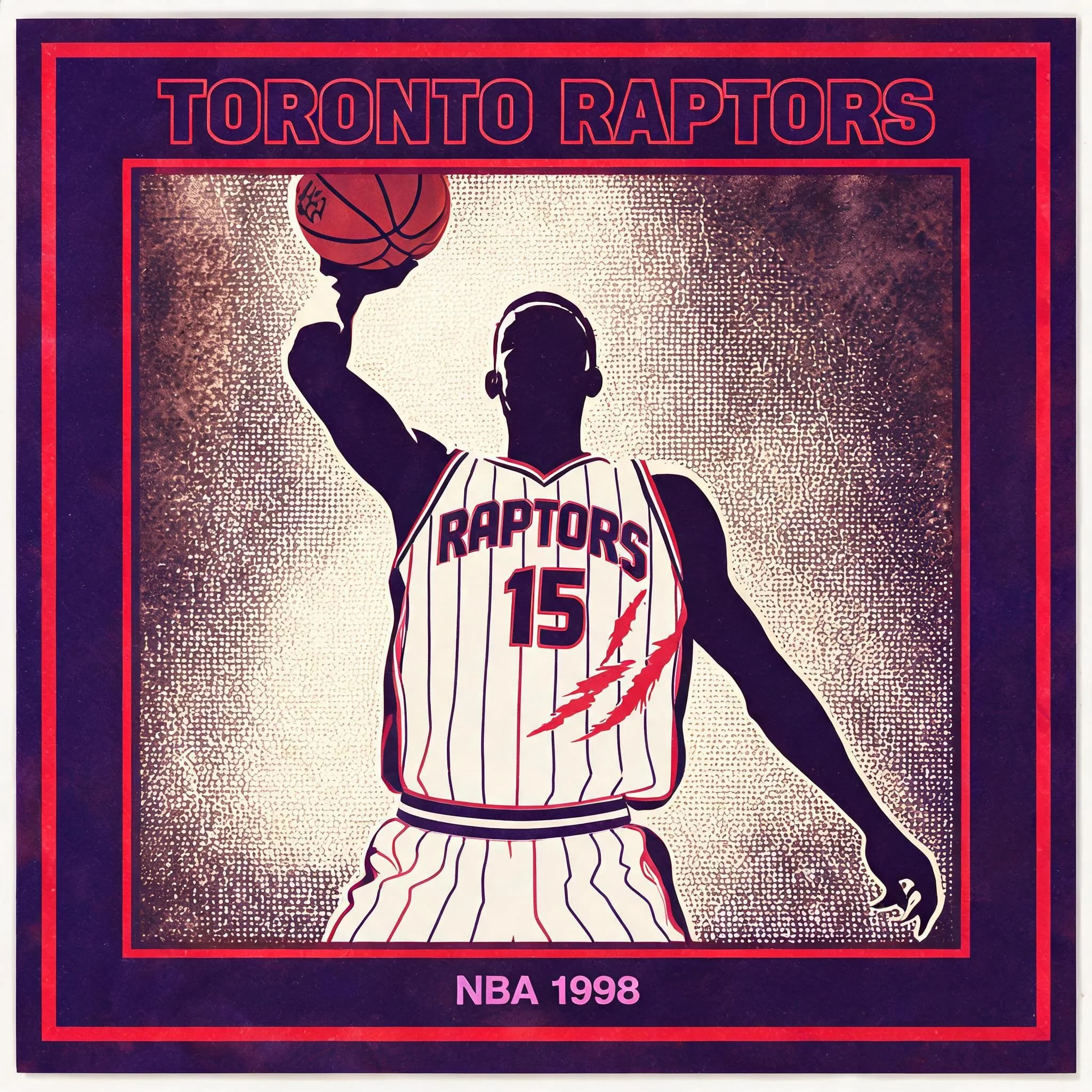
Toronto's black pinstripe alternate, introduced in 1999, represents the darker aesthetic of Carter's prime years. While the purple dinosaur jersey is joyful and nostalgic, the pinstripe is aggressive — it's the jersey Carter wore for his most vicious dunks during regular-season games. Collectors who want "Vinsanity" rather than "Air Canada" gravitate toward the pinstripe.
Market dynamics are favorable: the pinstripe was produced in smaller quantities than the primary purple jersey, and fewer Mitchell & Ness reproductions exist. Authentic vintage pinstripes consistently trade at a 20-30% premium over equivalent purple jerseys from the same season.
The Nets Era and Beyond
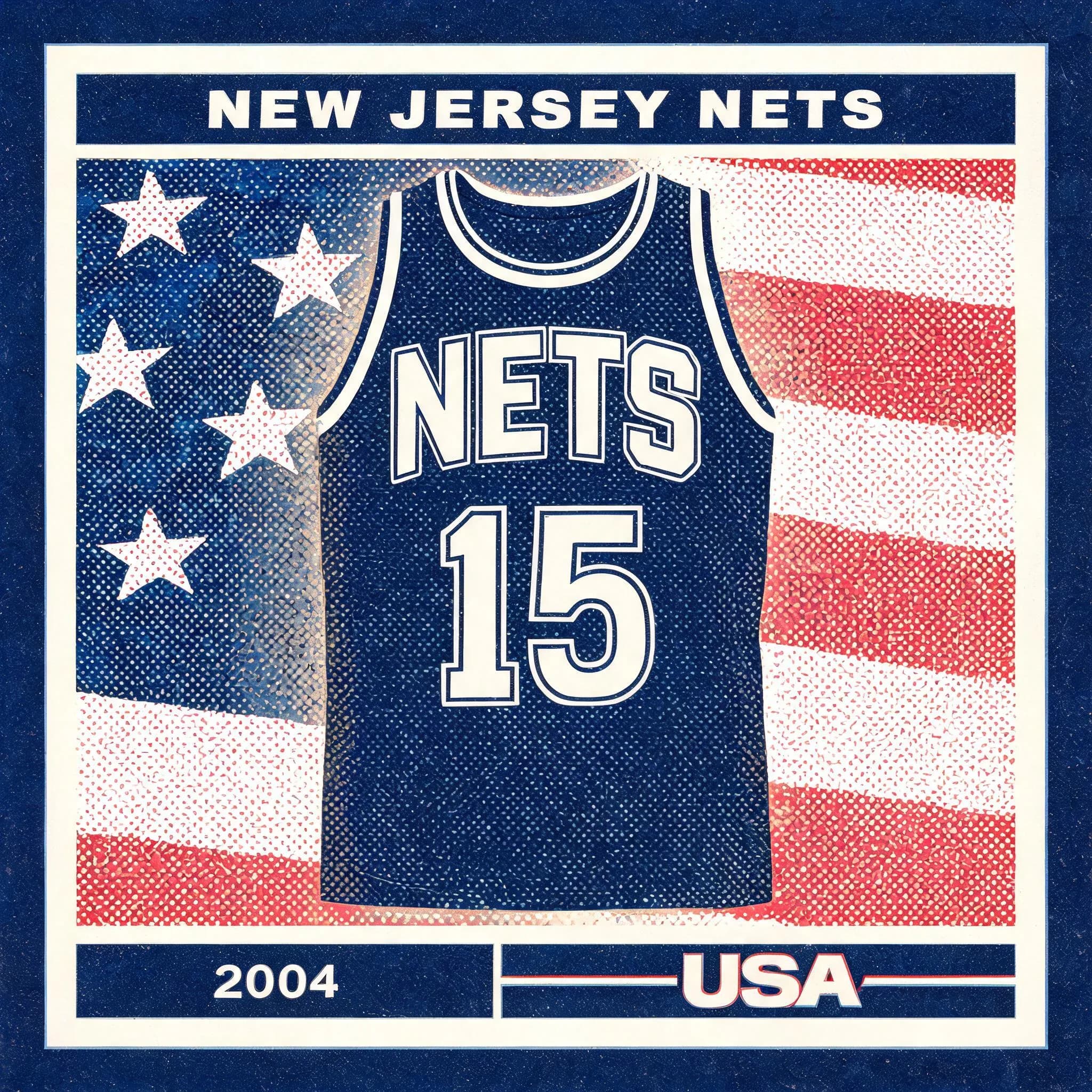
Carter spent six seasons with the New Jersey Nets (2004-2009), including the era of their controversial American flag alternate jersey. While the Nets years are generally dismissed by casual fans, serious Carter collectors recognize this period as undervalued — particularly the 2005-2006 season when Carter averaged 24.2 points and the Nets made the playoffs.
Carter's 22-season career — spanning four decades of play — means his later jerseys (Magic, Mavericks, Grizzlies, Hawks) trade at minimal premiums. The market is clear: Raptors purple is the grail, Raptors pinstripe is the connoisseur's pick, and everything else is a footnote. Collect accordingly.
The Collection
Below you'll find detailed guides to Carter's most collectible jerseys — from the dinosaur-era purple that launched Canadian basketball to the aggressive pinstripe alternate. Each covers authentication markers, current pricing, and the nostalgia premium that drives this uniquely emotional market.