JerseyTome Research Team
May 9, 2026 · 10 min read· Verified collectors & authenticators
After the Feud
In 2004, the Los Angeles Lakers imploded. Phil Jackson left. Kobe demanded a trade or Shaq's departure. The franchise chose Kobe. Shaq was traded to Miami for Lamar Odom, Caron Butler, and Brian Grant.
At 32, everyone assumed Shaq's championship window had closed. He was heavier, slower, dealing with toe injuries that had plagued his final Lakers seasons. The narrative was clear: aging superstar goes to a secondary market to play out his remaining good years alongside a young star.
That young star was Dwyane Wade. And together, in 2006, they won the NBA championship — coming back from 0-2 down against Dallas to win four straight. Shaq's fourth ring. The one nobody expected.
The Miami Heat black jersey from this era represents something Lakers-era Shaq never had to embody: resilience. Proving doubters wrong. Winning after being discarded.
Market Context: Shaq's Heat Era vs. Lakers Era
Shaq Heat jerseys are notably less expensive than their Lakers equivalents despite carrying championship provenance. Some context:
- It's a championship jersey. Shaq won his fourth ring in Miami. Championship provenance is championship provenance.
- It's 2-3x cheaper than Lakers equivalents. A championship-season Shaq Heat authentic currently trades for $250-400. A Lakers three-peat equivalent trades for $500-800.
- Wade's rising legacy adds context. As Dwyane Wade's career is reassessed (three championships, Finals MVP, cultural icon), the 2006 partnership carries retroactive significance.
- Lower collector attention. Most Shaq collectors focus on Orlando or Lakers. Heat-era pieces receive less demand, which is reflected in current pricing.
Recent secondary market data shows Heat-era Shaq pieces have traded higher in the past 18 months, though collectibles markets are inherently unpredictable.
Black vs. White vs. Red
Miami offered three standard colorways during Shaq's tenure:
White (home): Clean, traditional Miami look. Most game-worn pieces are white because teams play half their games at home. But visually, it's the least dramatic option for a display piece.
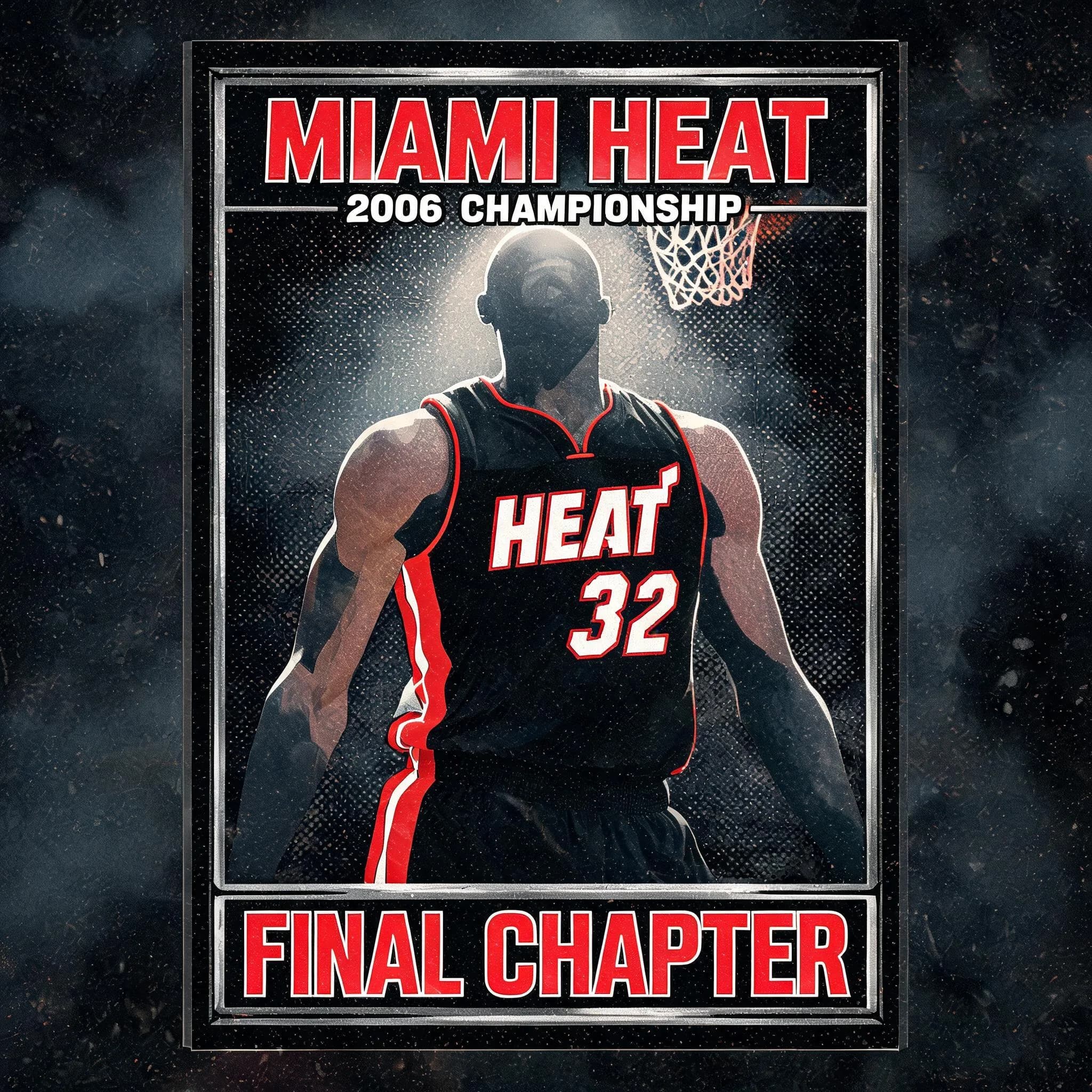
Black (alternate): The visual showstopper. Shaq in all-black, size 58, #32 in red — it looks like a supervillain's uniform. Mitchell & Ness chose to reproduce this version specifically because of its visual impact. The black is the Shaq Heat jersey in most collectors' minds.
Red (road): The traditional Heat road jersey. Worn in the 2006 Finals for Games 1, 2, and 6 (the clincher). Championship-game-specific pieces in red carry a Finals narrative premium.
For most collectors: black for display, red for championship narrative, white only if you find a game-worn steal.
The 2006 Finals Comeback
The 2006 Finals were remarkable. Dallas led 2-0 and appeared to have the series wrapped. Then Dwyane Wade happened — averaging 34.7 PPG over the final four games. Shaq's role was reduced compared to his Lakers dominance (averaging 13.7 PPG, 10.2 RPG in the Finals), but his presence was the reason Miami had home-court advantage. His gravity in the post created the spacing Wade needed to attack.
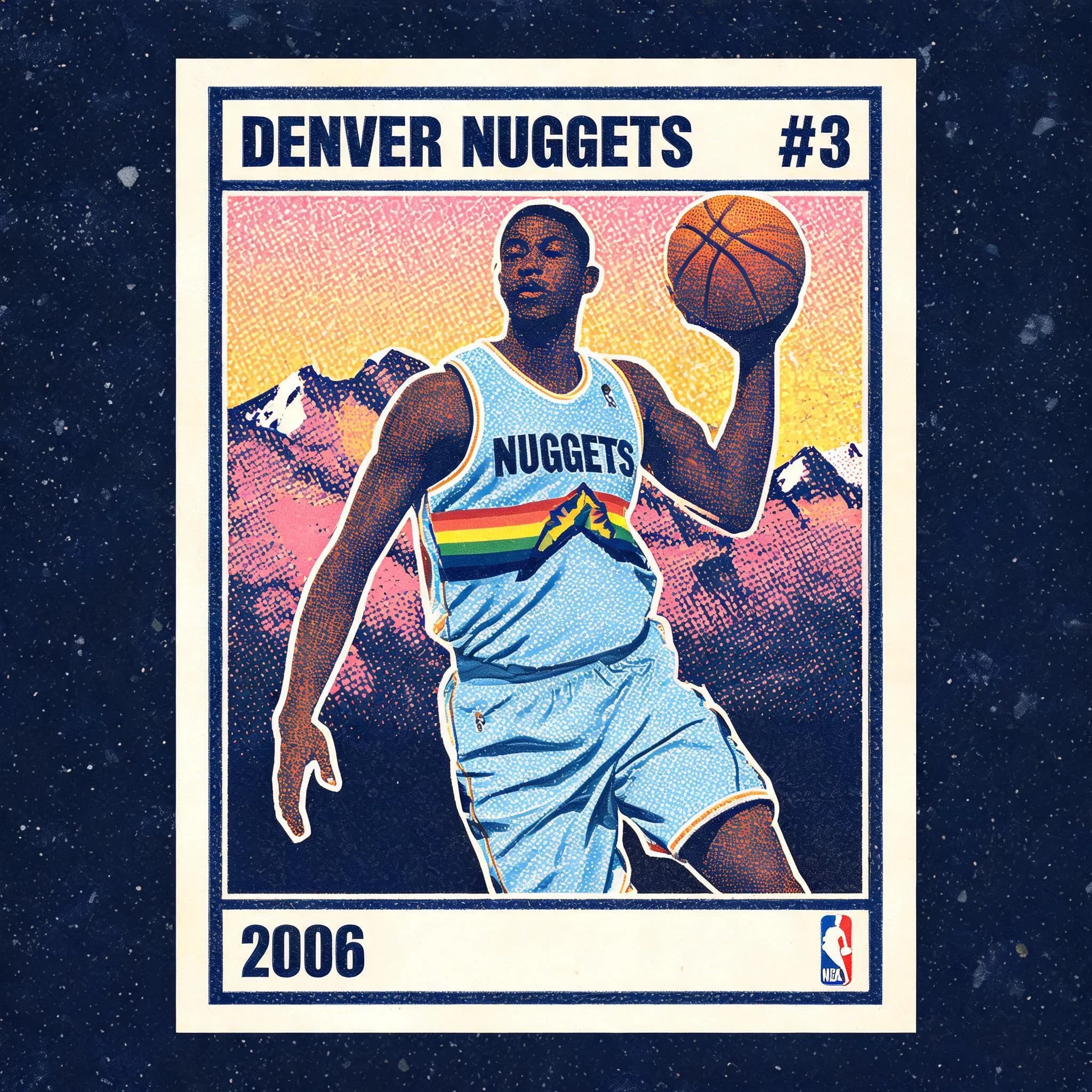
For jersey collectors, this supporting-role narrative is actually the source of the undervaluation. Collectors default to "the star's jersey" for championship moments — which means Wade's #3 gets the premium while Shaq's #32 gets the discount. But a championship is a championship. The ring doesn't care who scored more.
A 2006 Finals game-worn Dwyane Wade jersey sold at auction for $285,000 in 2023. An equivalent Shaq game-worn from the same series is estimated at $40,000-$80,000. Same championship, same night, 3-5x price difference. That gap may narrow as the partnership is re-evaluated historically.
Authentication
For a complete methodology covering Reebok, Adidas, and all NBA jersey manufacturer verification, see our authentication guide.
-
Reebok template (2004-2006): Shaq's first two Miami seasons used Reebok. Look for the Reebok vector logo on the left chest and the NBA logoman on the right shoulder.
-
Adidas template (2006-2008): Adidas took over in 2006-07 season. The championship year (2005-06) was Reebok.
-
Size (game-worn): Same as always — Shaq game-worns are size 56-60. Anything smaller is retail or fake.
-
Heat red accent accuracy: Miami's red is a specific warm red — not crimson, not orange-red. Compare against verified team photos for accurate color matching.
-
Number construction: #32 in white on black, multi-layer tackle twill. Clean stitching, no loose threads.
Design Analysis — The Black Alternate's Visual Power
The Miami Heat black alternate from the mid-2000s is one of the most visually striking jerseys in NBA history, and Shaq's size amplified that effect. Understanding the design details helps both authentication and appreciation.
The base color is a true matte black — not charcoal, not dark gray. Under arena lighting, the black absorbs light while the red and white accents pop aggressively. This contrast ratio is what made the jersey so photogenic and why it became the preferred version for posters, media guides, and promotional materials during Shaq's Miami tenure.
The "HEAT" wordmark across the chest uses the franchise's custom typeface with a subtle flame motif integrated into the lettering. On the Reebok authentic template, this wordmark is multi-layer tackle twill — red letters with a white outline on the black base. The layering creates a dimensionality that flat screen-printed replicas cannot match. When you tilt an authentic under a light source, you can see the shadow cast by the raised stitching. This is the fastest tactile authentication check available.
The side panels feature a red accent stripe running from the armhole to the hem, bordered by thin white piping. On Reebok templates, this stripe is a separate sewn panel, not a printed element. Counterfeit jerseys almost always use heat-transfer printing for the side stripes, which feels smooth and plastic to the touch rather than the textured fabric of an authentic.
The number placement follows NBA standards — centered on the chest and back, with the player's surname in arched lettering across the upper back. For Shaq, the "O'NEAL" nameplate required special attention because of the apostrophe — on authentic pieces, the apostrophe is a separate small piece of tackle twill, precisely placed. Counterfeits often omit it, merge it into the O, or position it incorrectly. This is a subtle but reliable authentication detail specific to Shaq jerseys.
The NBA logoman patch sits on the left shoulder, with the Reebok vector logo on the right chest. The Heat's flaming basketball secondary logo appears on the shorts waistband but not on the jersey itself — if you see a flaming basketball patch on the jersey, it's either a custom modification or a counterfeit.
The Shaq-Wade Dynamic and Its Market Implications
Understanding the Shaq-Wade partnership is essential for pricing context. When Shaq arrived in Miami in 2004, the power dynamic was unusual: Shaq was the established superstar, but Wade was the ascending franchise cornerstone. By the 2006 championship run, that dynamic had clearly shifted. Wade was the alpha — his 34.7 PPG in the final four games of the Finals is one of the greatest individual playoff performances ever recorded.
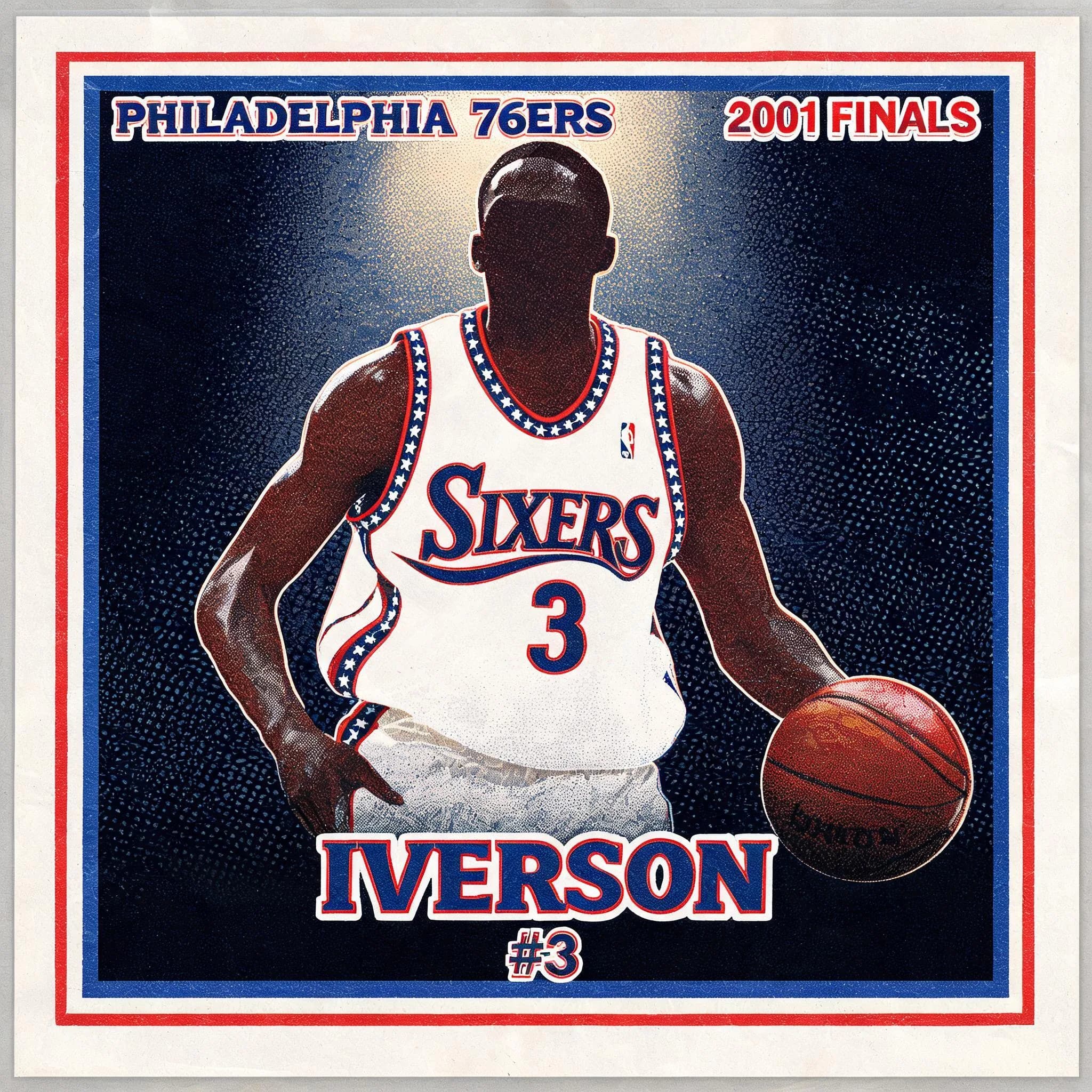
This shift is directly reflected in the memorabilia market. Wade #3 jerseys from the 2005-06 championship season trade at roughly $800-1,500 for Reebok authentics, while equivalent Shaq #32 pieces trade at $250-500. The gap is even more dramatic for game-worn pieces, where Wade commands 3-5x Shaq's prices from the same Finals series.
For collectors, this price gap reflects how the market weights individual playoff performance over team contribution. Shaq's regular-season numbers (20.0 PPG, 9.2 RPG) were still All-Star caliber. His post presence was the gravitational anchor that created driving lanes for Wade. The Heat do not win the 2006 championship without Shaq — this is not debatable. Yet the market prices his jersey as if he were a role player.
A comparable case is Scottie Pippen's Bulls jerseys, which were priced far below Jordan's for decades before collectors began recognizing dynasty-era Pippen pieces as championship artifacts in their own right. Whether Shaq's Heat jersey follows a similar path is uncertain — collectibles markets are unpredictable — but the championship pedigree is indisputable regardless of future pricing.
Collecting Strategy — Building a Shaq Heat Position
For collectors specifically targeting Shaq Heat pieces, the strategy depends on budget tier and time horizon:
Budget tier ($80-$150): Start with a Mitchell & Ness Swingman or Fanatics replica in the black alternate. These are widely available, well-constructed for the price, and serve as excellent display pieces. They won't appreciate meaningfully, but they let you own a quality representation of the jersey while you save for a better piece.
Mid tier ($250-$500): This is where the real value lives. A Reebok authentic from the 2004-2006 window — especially the 2005-06 championship season — is a legitimate collectible at accessible prices. Look for pieces with the original jock tag intact, clean stitching, and no repairs. Championship-season pieces from this price range are arguably the best value proposition in the entire Shaq jersey market across all teams.
Upper tier ($500-$2,000): Deadstock Reebok authentics with original retail tags, or team-issued pieces (pro-cut jerseys that were manufactured for but not confirmed worn by Shaq). These represent the ceiling for retail-grade collecting before entering the game-worn market.
Elite tier ($40,000+): Game-worn pieces, ideally photo-matched to a specific game. The 2006 Finals games are the ultimate target, but any regular-season game-worn from the championship season carries significant provenance. At this level, authentication through MeiGray, PSA/DNA, or direct team LOA is non-negotiable.
A patient collector building a position over 2-3 years should start at the mid tier, acquiring one high-quality Reebok authentic, and then watch auction results quarterly for opportunities to upgrade. The Shaq Heat market is still inefficient enough that motivated sellers occasionally price pieces 20-30% below fair market value, especially in mixed lots or estate sales where the seller doesn't fully understand what they have. Our where to buy guide covers the major authenticated resale channels and auction houses where these opportunities surface. For long-term preservation of acquired pieces, the jersey care guide details storage protocols specific to Reebok-era mesh construction.
Comparison: Shaq Heat Black vs. Shaq Lakers Purple
The two championship-era Shaq jerseys occupy very different positions in the market:
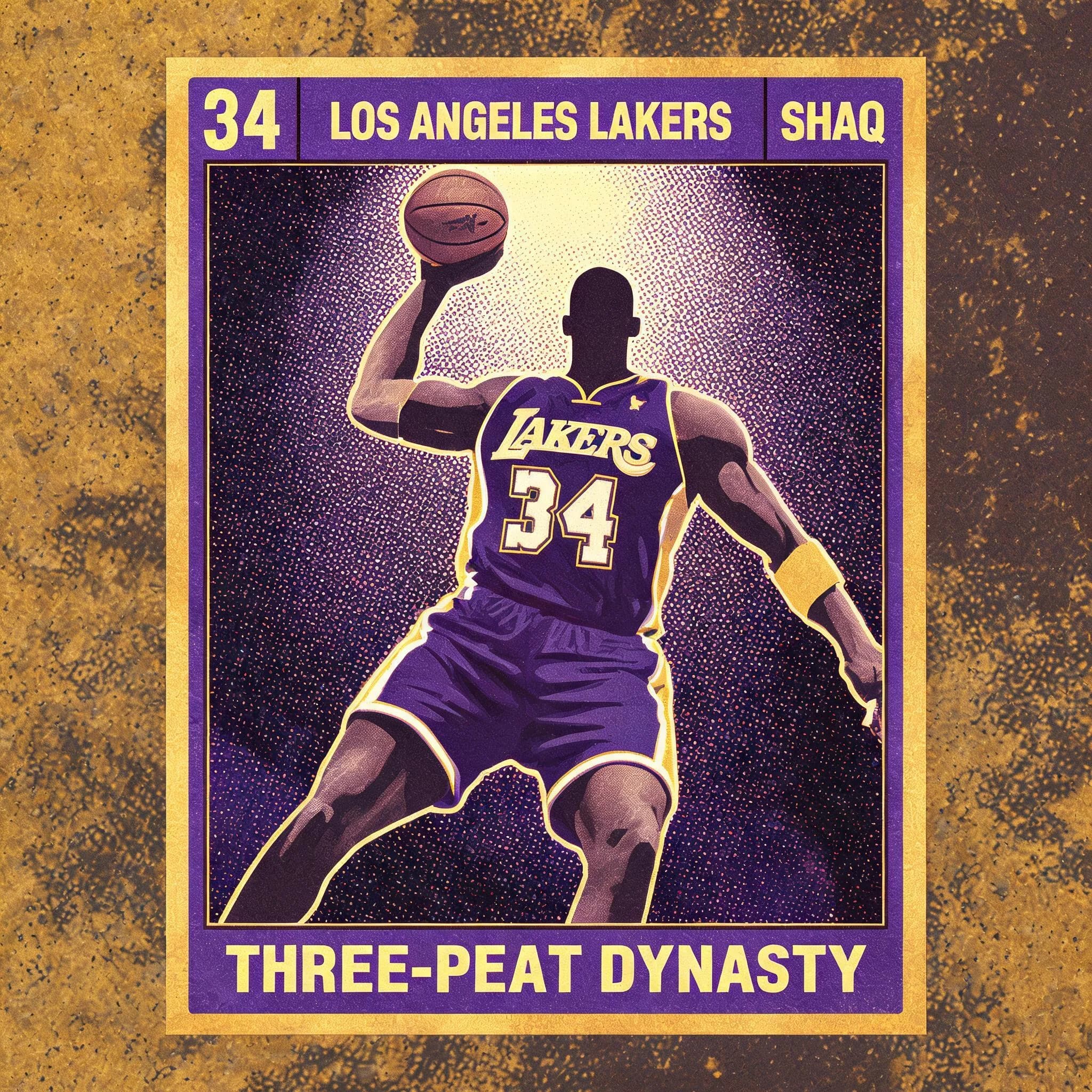
The Lakers purple is the prestige piece. It represents peak physical dominance — Shaq at his absolute best, winning three straight Finals MVPs, destroying every defensive scheme the league could devise. The purple-and-gold color combination is the most iconic in basketball. Lakers Shaq jerseys trade at 2-3x equivalent Heat pieces and are considered blue-chip collectibles.
The Heat black is the value piece. It represents something the Lakers jersey never captured — a second act, a revenge tour, winning after being told the window had closed. The 2006 championship is Shaq's most emotionally resonant ring for collectors who appreciate narrative over raw dominance. And at current prices, you get championship provenance at a fraction of the Lakers cost.
The smart play for a Shaq-focused collection is to own both. But if you must choose one and you're optimizing for future appreciation potential, the Heat black has more room to grow. It's priced for "supporting role Shaq" but the historical record will increasingly recognize it as "championship Shaq in a different city." That revaluation hasn't fully happened yet.
Where to Buy
Affiliate links — we earn a small commission at no extra cost to you. Prices as of last update; click through for current pricing.
Acquire This Jersey
Affiliate links — we earn a small commission at no extra cost to you.
Resale Price Trend
+23.1%Collector Tools
Affiliate disclosure: Some links earn us a small commission at no extra cost to you. We only recommend products we'd buy ourselves.